
Copyright 2026 © Leading Tools Industrial Co., Ltd.
All Rights Reserved. Website Design by Awakening Design
CATALOG TYPE
Product Categories
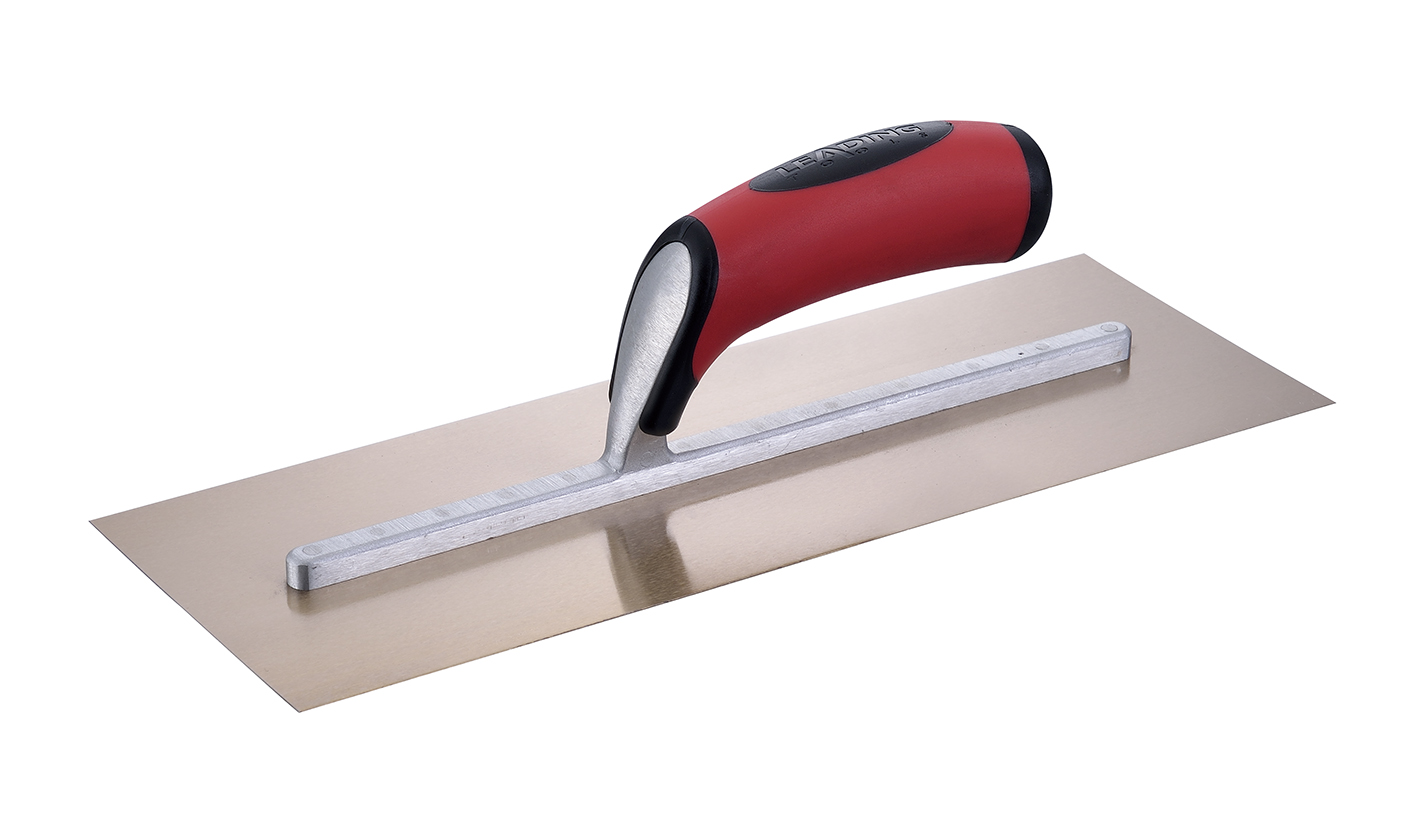
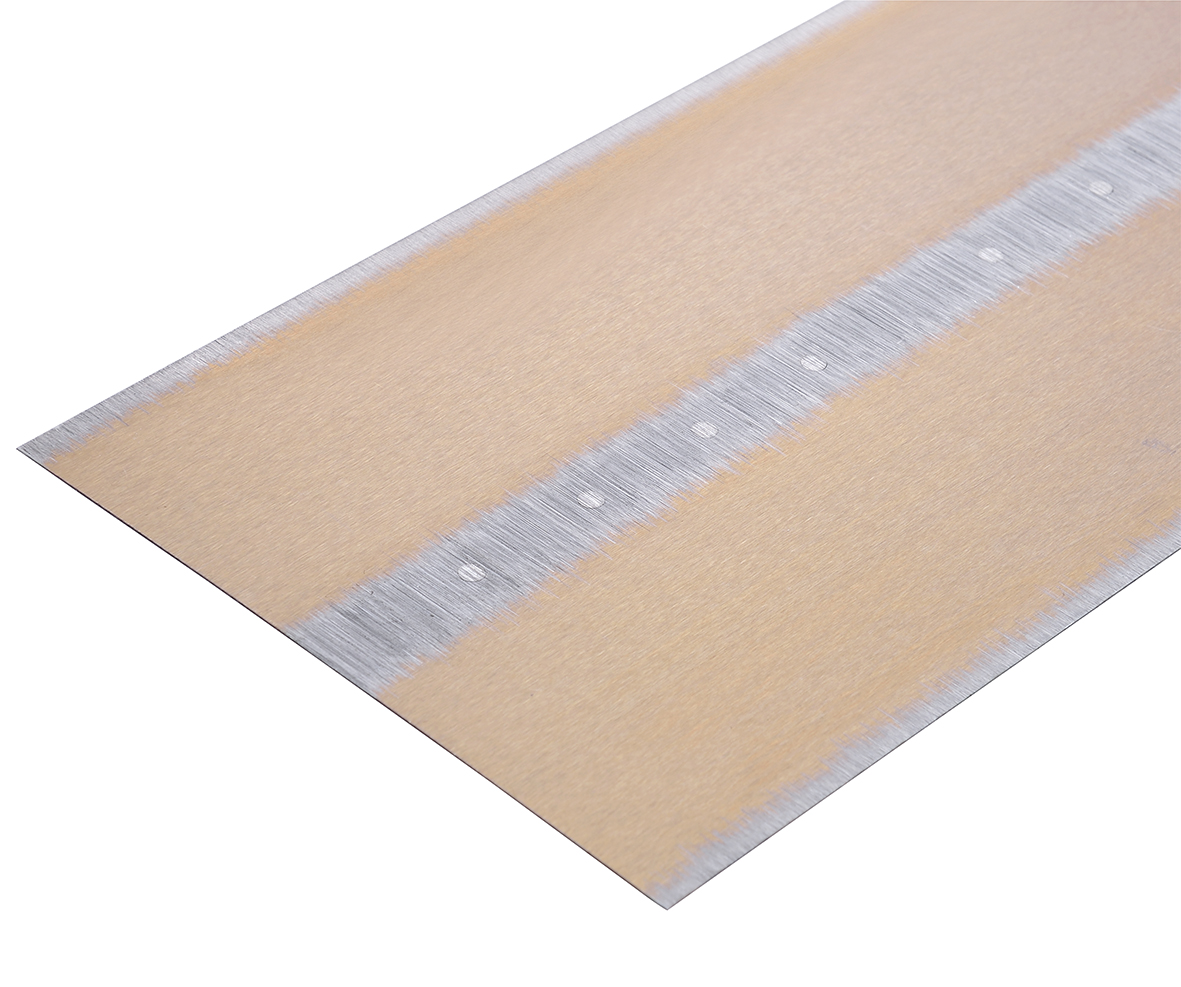
Golden Plaster Trowel
Product Description
| Item | Detail |
|---|---|
| Product name | Golden Plaster Trowel |
| Art. Nr (this model) | 431821G |
| Blade size | 3" x 11" (76 x 279 mm) |
| Product family | Plaster Trowel range |
| Series sizes | 15 art numbers, 3" to 4-3/4" wide x 11" to 18" long |
| Defining construction | Mount Riveted / Designed Alloy Stainless Steel / Pre-Worn Edge |
The Golden Plaster Trowel is a rectangular flat-blade plastering and finishing trowel: the tool a plasterer uses to lay on and then close the surface of gypsum, lime and cement-based coatings.
Art. Nr 431821G is the narrowest, shortest member of the family at 3" x 11", which makes it the control size of the range rather than the coverage size: patch repair, feathering into existing work, window reveals and sills, and any pass where the operator needs to see the edge of the blade. Every art number in this family shares three defining construction points: a mount-riveted blade, a designed alloy stainless steel blade with a golden finish, and a Pre-Worn Edge.
Stainless blade, no oiling routine. Carbon steel blades need drying and oiling after every wash. The designed alloy stainless steel blade has high corrosion resistance and low maintenance; chlorinated water, coastal air or prolonged soaking can still cause rust spots, so rinse with clean water and dry after use.
Finishes clean from the first job. The Pre-Worn Edge is a factory-prepared, broken-in edge. It exists so that a new trowel does not leave line and ripple marks in the finish coat while the user wears the edge in; bevelled edges also stop surface aggregate from popping up under the blade.
One tool for both stages. The same blade lays material on and closes it, so on small repairs the operator does not swap tools between the application pass and the finishing pass.
Correct blade material for lime and cement. Stainless does not stain or discolor lime and gypsum finishes the way a rusting carbon blade can, which matters on white and pigmented lime finishes.
Full size coverage from one line. The 15 art numbers cover 3"–4-3/4" widths and 11"–18" lengths, and the Premium Plaster Trowel uses the identical size ladder, so a buyer can choose between the two blade materials at every size without adding a second size system.
| Job | Use this trowel? | Note |
|---|---|---|
| Laying on and closing gypsum, lime or cement-based plaster | Yes, this is the tool's primary job | Flat blade, both application and finishing passes |
| Skim coating over existing plaster or drywall compound | Yes | Narrow widths give the most control on small areas |
| Flattening and embedding mesh in an EIFS / ETICS base coat | Yes, as the second tool | Comb the insulation-board adhesive with a notched trowel first; the flat blade then smooths the base coat and embeds the mesh |
| Combing tile adhesive or EIFS insulation-board adhesive to thickness | No | That requires a notched trowel; notch size sets bed thickness |
| Bedding brick or block | No | That is a pointed brick trowel (London / Philadelphia patterns), a different tool class |
| Power-floating a concrete slab | No | Slab finishing uses concrete floats and power trowels, not a hand plastering trowel |
| Step | Action | Note |
|---|---|---|
| 1 | Prepare the substrate | Follow the plaster manufacturer's substrate instructions; apply a bonding agent on smooth or non-absorbent backgrounds |
| 2 | Load the blade from a hawk | Transfer a measured amount of material onto the blade rather than scooping from the bucket |
| 3 | Lay on with even pressure | Apply the material with steady, even pressure in straight or arcing passes; even pressure is what removes air bubbles and unevenness |
| 4 | Wait for the coat to firm up before closing it | Close the surface once the coat takes a thumbprint without releasing material |
| 5 | Close the surface in successive lighter passes | Lower the blade angle and lighten the pressure with each pass; a light mist of water on the blade reduces drag |
| 6 | Clean the blade before the material sets | Rinse and wipe immediately after use; never let material harden on the blade |
Grip: for finishing passes, trap the handle bar between the index and middle fingers with the remaining fingers supporting, which stabilizes the blade angle through the pass.
Thin-coat skimming over an existing plastered wall or over drywall joint compound is a typical use for this trowel: the smooth blade face leaves a closed surface that needs very little sanding.
Work in thin passes, let the coat firm to a thumbprint set, then close it with two or three progressively lighter passes; the smoothness of the blade face, not the pressure applied, is what produces the finish. On this 3" x 11" size, skimming is limited to small panels, reveals and patches; for a full wall, move up to a 4-1/2" or 4-3/4" width.
Stainless blades are the standard choice for lime work because they are far less likely to leave rust stains on a white or pigmented lime finish, and because a smooth blade face drags less across a breathable lime matrix.
In dry or warm weather, keep the substrate misted so the material retains its open time, and reduce the size of the area worked in one go rather than trying to rework material that has begun to set. The stainless flat trowel is also the standard tool for exterior render and insulation-render systems, which is the same duty.
In exterior insulation systems, the flat trowel is the second tool in the sequence, not the first. The insulation-board adhesive is combed on first with a stainless notched trowel.
The flat trowel then applies the base coat, embeds the reinforcing mesh and works the coat down to the thickness specified by the system manufacturer, until the mesh color is no longer visible. Do not try to establish the adhesive bed thickness with the flat blade; the notch size, not the flat pass, is what sets it.
This is the size that 431821G is built for. The 3" width fits between openings, into reveals and along sills where a 4-1/2" blade cannot reach flat, and the short 11" length lets the operator see the leading edge. Work in thin coats and let each coat firm before applying the next, then feather the last pass out flush with the surrounding surface at the lowest workable blade angle so the repair edge disappears rather than standing proud.
Q1. Why is the blade gold? Will the color wear off?
The blade is specified as Designed Alloy Stainless Steel with a golden finish. For surface treatment details, contact us.
Q2. Golden stainless or carbon steel?
Carbon steel rusts and must be dried and oiled after every cleaning. The golden stainless blade needs no oiling routine; rinse it with clean water and wipe it dry after use. Each art number corresponds to one blade material: the Golden and Premium Plaster Trowel art numbers are stainless steel. If you need a carbon steel blade in this shape, contact Leading Tools sales.
Q3. Which size should I order first?
For general wall work, 4-1/2" x 14" (464821G) is the usual first choice. Order 431821G (3" x 11") for repair and detail work, and the 16"-18" lengths only if you can keep a long blade flat.
Q4. The material drags or grabs during the finishing pass. What is wrong?
Most often the blade face is not clean. Hardened material on the face causes the drag, so clean it fully and check that the face is smooth. A light mist of water on the blade and a lighter, lower pass also help.
| Property | Detail |
|---|---|
| Material | Designed alloy stainless steel |
| Blade shape | Rectangular flat finishing blade, square corners |
| Blade size (431821G) | 3" x 11" (76 x 279 mm) |
| Construction | Mount riveted: over rivets through the shank and blade |
| Edge design | Pre-Worn Edge |
| Surface / color | Golden finish |
| Property | Detail |
|---|---|
| Handle type | Soft-grip handle (F21) |
| Mount | Blade and shank joined by rivets ("Mount Riveted") |
The soft grip is chosen for reduced hand fatigue and grip durability.
Widths available in this family are 3", 4", 4-1/2" and 4-3/4". The task mapping below is a practical guide rather than a published technical standard.
| Blade width | Primary use |
|---|---|
| 3" (76 mm) | Point work, patch repair, feathering into existing plaster, window reveals and sills |
| 4" (102 mm) | Small walls, repair work, tight spaces between openings |
| 4-1/2" (114 mm) | General-purpose width; a common size for wall work |
| 4-3/4" (121 mm) | Large open wall areas where coverage per pass matters more than access |
Lengths available are 11", 14", 16" and 18"; the 3" width is offered up to 16" only.
| Blade length | Primary use |
|---|---|
| 11" (279 mm) | Control and precision: small areas, ceilings, repairs |
| 14" (356 mm) | General-purpose length for walls of moderate size |
| 16" (406 mm) | Long continuous passes; needs a steady hand to keep the surface flat |
| 18" (457 mm) | Large wall areas; for experienced users only, since blade length magnifies any error in pressure |
Both families sit in the same Leading Tools plaster trowel line, use the same 15-size ladder, the same mount-riveted construction and the same Pre-Worn Edge. The art numbers differ only by the "G" suffix (431821 vs 431821G), so the choice is a blade material choice, not a geometry choice.
| Feature | Golden Plaster Trowel (431821G) | Premium Plaster Trowel (431821) |
|---|---|---|
| Blade material | Designed alloy stainless steel, golden finish | Stainless steel; for carbon steel, contact sales |
| Construction | Mount riveted | Mount riveted |
| Edge | Pre-Worn Edge | Pre-Worn Edge |
| Size ladder | 15 art numbers, 3"–4-3/4" x 11"–18" | 15 art numbers, identical sizes |
| Corrosion behavior | Stainless: high corrosion resistance, no oiling routine; rinse and wipe dry after use | Stainless: high corrosion resistance; rinse and wipe dry after use |
| Best for | Buyers who want a stainless blade with a golden finish, and finishers working lime and white gypsum finishes | Buyers who want a plain stainless blade in the same size ladder |
Leading Tools also offers an Ultra Flex Trowel (561821 series): a stainless plastering trowel positioned on blade flexibility rather than on blade finish. Where a customer's complaint is specifically "the blade is too stiff to follow the wall", that is the flex-led product; where the requirement is a general-purpose finishing trowel that resists corrosion and comes broken in, this is the Golden Plaster Trowel.
All 15 art numbers of the Golden Plaster Trowel family. Millimeter figures are conversions at 1" = 25.4 mm and are given for reference only; nominal sizes are stated in inches.
| Art. Nr | Blade size (W x L, in) | Blade size (W x L, mm) | Blade material | Handle |
|---|---|---|---|---|
| 431821G | 3" x 11" | 76 x 279 | Designed alloy stainless steel | Soft grip |
| 434821G | 3" x 14" | 76 x 356 | Designed alloy stainless steel | Soft grip |
| 436821G | 3" x 16" | 76 x 406 | Designed alloy stainless steel | Soft grip |
| 441821G | 4" x 11" | 102 x 279 | Designed alloy stainless steel | Soft grip |
| 444821G | 4" x 14" | 102 x 356 | Designed alloy stainless steel | Soft grip |
| 446821G | 4" x 16" | 102 x 406 | Designed alloy stainless steel | Soft grip |
| 448821G | 4" x 18" | 102 x 457 | Designed alloy stainless steel | Soft grip |
| 461821G | 4-1/2" x 11" | 114 x 279 | Designed alloy stainless steel | Soft grip |
| 464821G | 4-1/2" x 14" | 114 x 356 | Designed alloy stainless steel | Soft grip |
| 466821G | 4-1/2" x 16" | 114 x 406 | Designed alloy stainless steel | Soft grip |
| 468821G | 4-1/2" x 18" | 114 x 457 | Designed alloy stainless steel | Soft grip |
| 470821G | 4-3/4" x 11" | 121 x 279 | Designed alloy stainless steel | Soft grip |
| 474821G | 4-3/4" x 14" | 121 x 356 | Designed alloy stainless steel | Soft grip |
| 476821G | 4-3/4" x 16" | 121 x 406 | Designed alloy stainless steel | Soft grip |
| 478821G | 4-3/4" x 18" | 121 x 457 | Designed alloy stainless steel | Soft grip |

In compliance with EU personal data protection laws, we are committed to protecting and providing you with control over your personal data. By clicking "Accept All", you allow us to place cookies to enhance your experience on this site, help us analyze site performance and usage, and enable us to deliver relevant marketing content. You can manage your cookie settings below. By clicking "Agree" you agree to the current settings. For more information, please visit the Privacy Statement.
This website uses cookies
In compliance with EU personal data protection laws, we are committed to protecting your personal data and providing you with control over it. By clicking "Agree", you allow us to place cookies to improve your experience on this site, help us analyze site performance and usage, and allow us to deliver relevant marketing content.
By clicking "Only necessary" you allow us to place only necessary cookies. The website cannot function without these cookies and you cannot switch them off on your system. These cookies are typically set only in response to an action you perform (i.e. a service request), such as setting privacy preferences, logging in, or filling in a form. You can set your browser to block or prompt you for these cookies, but this may prevent some site features from working.