
Copyright 2026 © Leading Tools Industrial Co., Ltd.
All Rights Reserved. Website Design by Awakening Design
CATALOG TYPE
Product Categories
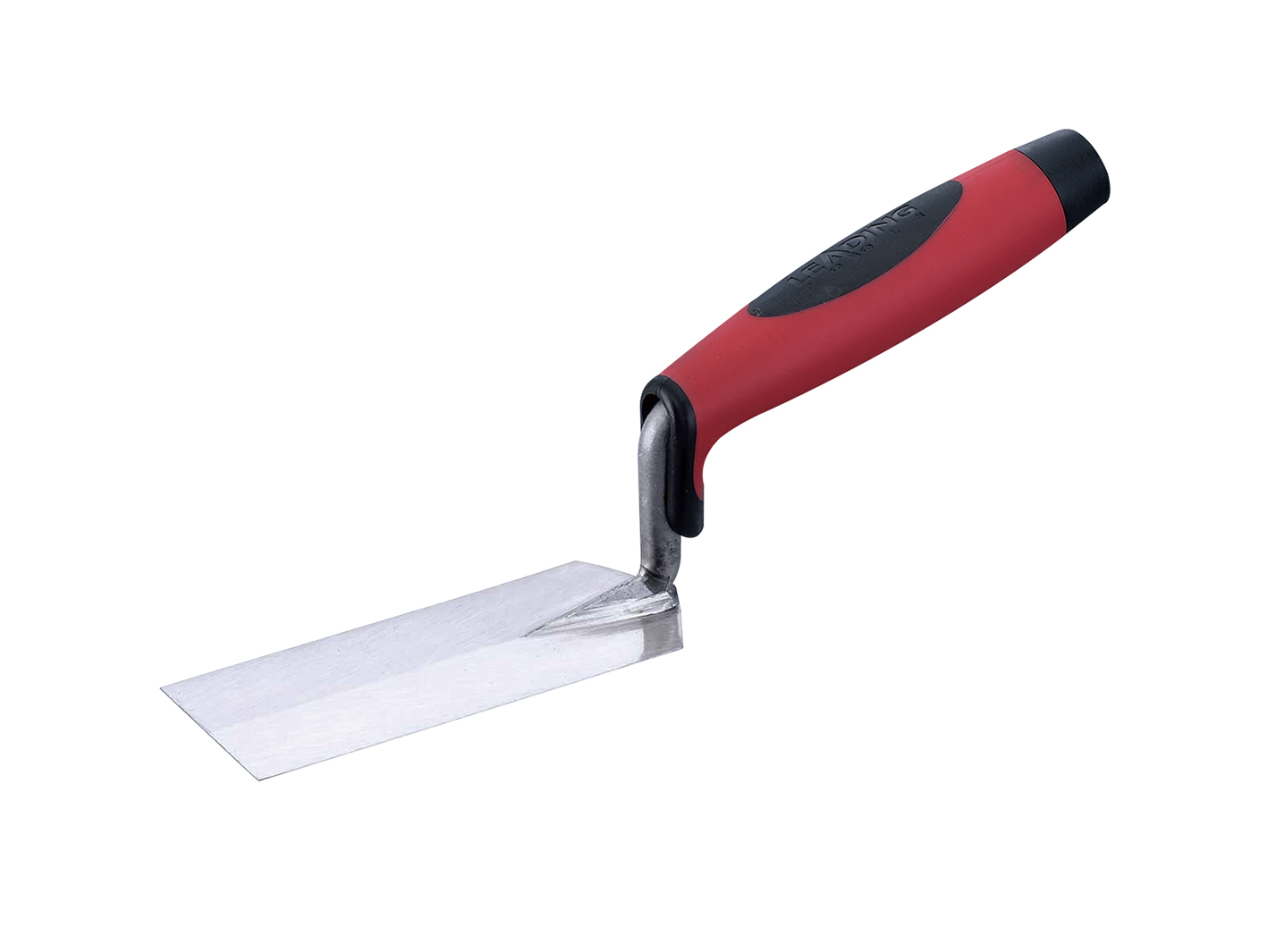
Margin Trowel — CO2 Welded Carbon Steel
Product Description
Product name: Margin Trowel
Construction line: CO2 Welding Carbon Steel
Art. Nr (four sizes): 144721 (1-1/2" × 5"), 145721 (2" × 5"), 146721 (2" × 6"), 148721 (2" × 8").
Sizes are stated in the order width × length: the first figure is the blade width, the second is the blade length. So 144721 is a 1-1/2" wide, 5" long blade, and 148721 is a 2" wide, 8" long blade. Two blade widths and three blade lengths make up the whole line.
Leading Tools builds a second Margin Trowel line alongside this one: Forged in One-piece High Carbon Steel, art numbers 044721, 045721, 046721, 048721, in the same four sizes, one for one. Both lines share the same pattern, sizes, polished carbon steel blade and soft grip handle.
It is the same Margin blade geometry and the same handle, built by a different joining method. The Selection Guide below sets out how to choose between the two.
The blade is narrow on purpose, and the width band is the specification that matters. A margin trowel exists because a bricklaying trowel is the wrong shape for finishing work: too wide to sit inside a recess, too pointed to press flat into a square corner.
A margin trowel is specified for small repairs, tight spaces and detail work, and for placing and cleaning up mortar in joints, in narrow corners and in spaces a standard trowel cannot enter. At 1-1/2" and 2" the two widths here are squarely inside that class.
A flat toe reaches places a pointed toe cannot. Because the toe is flat rather than tapered, the blade can be run into an internal corner and pushed to the back of a recess with the full blade width in contact. The flat toe suits work in corners and confined spaces and produces a precise, clean finish.
Longer blade, same width: reach without a wider footprint. Moving from 145721 (2" × 5") to 148721 (2" × 8") adds 3" of reach and roughly 60% more blade area per pass, without adding a millimetre of width. On a tool whose whole purpose is to fit into something narrow, that is the only useful way to add capacity.
Carbon steel. Carbon steel blades must be dried and thinly oiled after use, or they rust. Step 4 of the Selection Guide compares stainless.
Soft grip handle across all four sizes. Every art number in this line is fitted with the BF21 soft grip handle. The same construction and the same handle run right across the size range, so a buyer stocking two or three sizes gets one consistent grip in the hand.
A four-size line that pairs one-for-one with a forged line. A customer can choose between the two constructions without any change in geometry.
| Situation | Use the Margin Trowel? | Why |
|---|---|---|
| Placing mortar into a joint or recess that a brick trowel cannot enter | Yes | Narrow blade, flat toe; the defining application of the class |
| Cleaning mortar out of a corner or a narrow space | Yes | A flat toe reaches the corner with the full blade width in contact |
| Small repairs, patching and detail finishing | Yes | The margin class is specified for small repairs, tight spaces and detailed work |
| Scraping mortar or adhesive out of a bucket or off a mixing board | Yes | A standard use of the margin/bucket trowel |
| Buttering thinset into an area a notched trowel cannot reach | Yes | Used for spreading adhesive in small or awkward areas |
| Lifting a set tile to check adhesive coverage | Yes | The blade is used to lift a tile and inspect the transfer |
| Spreading a full bed of thinset over an area | No | Use a notched trowel sized to the tile |
| Laying and bedding brick or block | No | Use a brick trowel; the margin blade is far too narrow |
| Prying, chiselling, or knocking out units | No | Not a demolition tool |
| Step | Action | Notes |
|---|---|---|
| 1 | Load the blade | Draw the blade edgewise through the mortar on the board or scoop from the bucket to pick up a narrow ribbon. A margin blade carries far less than a brick trowel: load little and often |
| 2 | Present the blade to the joint | Hold the blade at a shallow angle so the toe leads. The flat toe lets you push to the back of a recess without the tip catching |
| 3 | Scrape the material in | Work the mortar off the blade and into the joint or recess, keeping the blade inside the joint boundary so nothing is smeared onto the face |
| 4 | Draw down to finish | Run the blade along the joint to smooth the material into a flush or slightly recessed finish |
| 5 | Cut off | Turn the blade square to the face and draw the edge across to cut the excess off flush |
| 6 | Clean the blade | Wipe or scrape the blade before the material starts to go off. Fresh mortar comes off with a wipe; cured mortar is removed with a plastic scraper or a nylon brush |
Where new masonry meets a window frame, a door reveal, a column or existing work, there is a narrow margin that a full-width trowel simply cannot enter. This is the situation the tool is named for. Flat-toe narrow trowels are made for working in corners and confined spaces with a precise, clean result.
Reach is what governs the size choice here. A deep reveal or a long vertical return is easier with 148721 (2" × 8"); short work close to the hand is steadier with 145721 (2" × 5").
In tile work the margin trowel is a second tool alongside the notched trowel, not a replacement for it. It is used to butter adhesive into small or awkward areas that a notched trowel cannot reach, to lift a set tile and check how much adhesive actually transferred, and to scrape a bucket or bed out clean at the end of a mix.
While doing the coverage check with the blade, keep in mind that under ANSI A108.5 the contact coverage is 80% in dry areas and 95% in wet areas and outdoors; follow the adhesive manufacturer's data sheet and local codes. When the bed itself is being spread, use a notched trowel sized to the tile, not the trowel that happens to be in the bucket.
The flat, stiff, narrow blade is the right shape for scraping the last of a mix out of a bucket, off the sides of a mixing board, or out of a corner of a tub. The 8" blade (148721) is the one to reach for here, because the extra length keeps the hand out of the material.
For filling a spall, a chase, a small honeycombed area of concrete or a localised patch of render, the narrow blade puts material exactly where it is wanted and nowhere else. Where the patch is larger than the blade, the margin trowel places the material and a larger finishing trowel levels it.
Q: What exactly is a margin trowel, and how is it different from a pointing trowel?
A: A margin trowel has a narrow rectangular blade with a flat toe, while a pointing trowel has a tapered blade with a pointed toe. The margin class is used for small repairs, tight spaces and detail work; the pointing trowel is used for picking up small amounts of mortar, patching and detail work.
Q: Which size should I buy first?
A: 145721 (2" × 5"), the general-purpose size in the line: wide enough to move a useful amount of material, short enough to stay controllable. Add 148721 (2" × 8") when you need reach, and 144721 (1-1/2" × 5") when you work in narrow joints or tight against a finished face. In these sizes the first figure is the blade width and the second is the blade length.
Q: How does it compare with the forged version?
A: 144721 and 044721 differ only in construction: 044721 is forged in one piece, 144721 is CO2 welded, and the blade pattern, size, carbon steel blade and soft-grip handle are the same. The welded version joins blade and shank by weld, where the forged one is a single piece. Choose forged for daily professional use with heavier working loads, and welded for general detail and finishing work.
Q: Can I use it for tiling or laying brick?
A: For small and awkward areas that a notched trowel cannot reach, you can spread thinset with it, and lifting a tile to check how much adhesive transferred is another use. For the tile bed itself, use a notched trowel sized to the tile. It cannot lay brick, because a margin blade carries only a fraction of what a bed joint needs; use a Philadelphia or London brick trowel and keep the margin trowel for joints, corners and clean-up.
Q: How do I look after it, and when should I replace it?
A: Carbon steel rusts if left damp overnight, so clean, dry and oil it after use; if the crew will not do that, ask Leading Tools sales about stainless. If mortar will not release, check the blade face for cured residue, scratching or pitting, then check the mix. Replace the tool if there is a visible crack at the blade-to-shank junction, the blade is permanently bent or twisted, or the face is pitted so deeply that material no longer releases; a dull edge, light surface rust or a tired handle do not call for replacement.
| Geometric feature | Detail |
|---|---|
| Blade shape | Narrow rectangular; parallel sides |
| Toe | Flat (straight-edged), the defining feature of the pattern |
| Blade width | 1-1/2" (38 mm) or 2" (51 mm), depending on art number |
| Blade length | 5" (127 mm), 6" (152 mm) or 8" (203 mm), depending on art number |
| Length-to-width ratio | 2.5:1 to 4:1 across the line, the blade is always much longer than it is wide |
| Blade profile | Flat; no dish or curvature |
| Side edges | Straight, for cutting off flush |
Why the class exists as a separate pattern. The distinction that matters commercially is against the pointing trowel, which has a tapered blade with a pointed toe, while the margin trowel is the narrow rectangular blade.
The smaller the blade, the greater the control, which is why the margin class is specified for small repairs and detail work, while the tapered pointing trowel is used for picking up small amounts of mortar, patching and detail rendering. They are not interchangeable and a buyer specifying one when they meant the other will get the wrong tool.
The blade and the shank are joined by CO2 welding at the blade-to-shank junction. On the forged line (044721 / 045721 / 046721 / 048721) there is no junction at all: blade, shank and tang are one piece of high carbon steel.
What follows from that difference:
The blade is carbon steel, polished. Carbon steel blades must be dried and thinly oiled after use; left wet overnight they will rust.
| Attribute | Specification |
|---|---|
| Blade material | Carbon steel |
| Blade finish | Polished |
| Attribute | Specification |
|---|---|
| Handle type | Soft grip, BF21 |
| Shank | Carbon steel, joined to the blade by CO2 welding |
| Shank form | Short straight/offset shank, not a "swan neck" form |
| Other handles | Available on request: contact Leading Tools sales |
This is the first decision, because Leading Tools offers both constructions in the same four sizes.
| Consideration | CO2 Welded 144721 / 145721 / 146721 / 148721 | Forged 044721 / 045721 / 046721 / 048721 |
|---|---|---|
| Construction | Blade and shank joined by CO2 welding | Blade, shank and tang forged as one piece |
| Blade material designation | "CO2 Welding Carbon Steel" | "Forged in One-piece High Carbon Steel" |
| Sizes available | All four (1-1/2"×5", 2"×5", 2"×6", 2"×8") | All four: identical |
| Blade geometry | Identical Margin pattern | Identical Margin pattern |
| Handle | Soft grip, BF21 | Soft grip, BF21 |
Rule of thumb. Specify forged when the tool is in daily professional use and gets heavier working loads. Specify CO2 welded for general and occasional use: detail, patching, tight-space work, where the loads are small, controlled and mostly in line with the blade.
| Blade width | Art. Nr | Specify it when |
|---|---|---|
| 1-1/2" (38 mm) | 144721 | Maximum control is the priority: narrow joints, small patches, work close to a finished face, or a first tool for an apprentice. Smaller blade, more control |
| 2" (51 mm) | 145721, 146721, 148721 | General margin and detail work; more material moved per pass, still narrow enough to stay inside a recess |
Only two widths exist in this line, so this decision is quick. If the work needs a blade narrower than 1-1/2", this is the wrong tool class: look at a tuck pointing trowel instead (see Step 5).
| Blade length | Art. Nr | Specify it when |
|---|---|---|
| 5" (127 mm) | 144721, 145721 | Short controlled strokes; working close to the hand; fine finishing; a general-purpose choice |
| 6" (152 mm) | 146721 | A little more reach and a little more area per pass, with no loss of control |
| 8" (203 mm) | 148721 | Longest reach in the line: deep recesses, long horizontal runs, spreading over a larger patch in one pass, and reaching into a bucket or over a mixing board without putting a hand in the material |
A practical two-tool kit for most buyers is 145721 (2"×5") plus 148721 (2"×8"): one for control, one for reach, with 144721 added when the work includes narrow joints or work tight against a finished face.
This line is carbon steel only. Carbon steel must be dried and thinly oiled after use, or it rusts. Stainless has high corrosion resistance and low maintenance, but chlorinated water, coastal air or prolonged soaking can still cause rust spots, so rinse with clean water and dry after use. If the crew will not dry and oil tools at the end of the day, carbon steel is not the right choice: the tool will still work, but it will look rusty within a fortnight.
| If the job is | Specify |
|---|---|
| Placing and cleaning mortar in joints, corners and tight spaces; small repairs; detail and finishing work | Margin Trowel (this product) |
| Picking up small amounts of mortar, patching and detail rendering with a tapered blade and a pointed toe | Pointing Trowel: a different pattern, tapered blade, pointed toe |
| Forcing mortar deep into a raked joint with a blade matched to the joint width | Tuck Pointing Trowel: narrower blade widths than the margin class |
| Laying units, spreading and furrowing full bed joints | Brick Trowel (Philadelphia or London pattern): the margin trowel is not a laying tool |
| Spreading thinset over a tiled area | Notched trowel sized to the tile |
All four art numbers offered in this line:
| ART. Nr | Size (W × L) | Blade width | Blade length | Construction | Blade material / finish | Handle |
|---|---|---|---|---|---|---|
| 144721 | 1-1/2" × 5" | 1-1/2" (38 mm) | 5" (127 mm) | CO2 Welding Carbon Steel | Carbon steel, polished | Soft grip, BF21 |
| 145721 | 2" × 5" | 2" (51 mm) | 5" (127 mm) | CO2 Welding Carbon Steel | Carbon steel, polished | Soft grip, BF21 |
| 146721 | 2" × 6" | 2" (51 mm) | 6" (152 mm) | CO2 Welding Carbon Steel | Carbon steel, polished | Soft grip, BF21 |
| 148721 | 2" × 8" | 2" (51 mm) | 8" (203 mm) | CO2 Welding Carbon Steel | Carbon steel, polished | Soft grip, BF21 |
Metric conversions are calculated at 1" = 25.4 mm and rounded to the nearest millimetre; the nominal sizes are specified in inches only.
| Size (W × L) | CO2 Welded | Forged in One-piece |
|---|---|---|
| 1-1/2" × 5" | 144721 | 044721 |
| 2" × 5" | 145721 | 045721 |
| 2" × 6" | 146721 | 046721 |
| 2" × 8" | 148721 | 048721 |
| Attribute | Specification |
|---|---|
| Blade pattern | Margin, narrow rectangular blade, flat toe |
| Construction | CO2 Welding Carbon Steel, blade and shank joined by CO2 welding |
| Blade material | Carbon steel, polished |
| Handle | Soft grip, BF21 |
| Primary function | Margin and detail work; mortar placement and clean-up in tight spaces |
Carbon steel will rust if it is left wet, and mortar left on the blade holds moisture against the steel. The routine is short and it is not optional:
Because this line is welded rather than forged, the blade-to-shank junction deserves a look each time the tool is cleaned. The reason is drainage and inspection, not fragility:
| Storage interval | Action |
|---|---|
| Overnight, in use next day | Clean, dry completely, wipe with a thin film of tool oil, store dry. Carbon steel left damp overnight will rust |
| Between jobs (a week or two) | Clean thoroughly, oil blade and shank including the weld, store in a dry box or a tool roll |
| Long-term storage | Clean, oil, and wrap the blade in an oiled cloth or waxed paper before boxing |
The straight side and toe edges take the cut-off work and will dull. Dress them lightly with a fine mill file, following the original factory edge: do not reprofile the edge or put a knife bevel on it. Light surface rust can be taken off with a rust eraser or fine abrasive and the blade re-oiled; pitting on the working face is a reason to replace the tool, because a pitted face will not release material cleanly.
The soft grip handle needs only soap and water and an inspection for cuts, tears or any movement at the neck. A grip that has begun to rotate on the shank should be replaced rather than glued, because a grip that turns under load is how a hand slips onto a blade.

In compliance with EU personal data protection laws, we are committed to protecting and providing you with control over your personal data. By clicking "Accept All", you allow us to place cookies to enhance your experience on this site, help us analyze site performance and usage, and enable us to deliver relevant marketing content. You can manage your cookie settings below. By clicking "Agree" you agree to the current settings. For more information, please visit the Privacy Statement.
This website uses cookies
In compliance with EU personal data protection laws, we are committed to protecting your personal data and providing you with control over it. By clicking "Agree", you allow us to place cookies to improve your experience on this site, help us analyze site performance and usage, and allow us to deliver relevant marketing content.
By clicking "Only necessary" you allow us to place only necessary cookies. The website cannot function without these cookies and you cannot switch them off on your system. These cookies are typically set only in response to an action you perform (i.e. a service request), such as setting privacy preferences, logging in, or filling in a form. You can set your browser to block or prompt you for these cookies, but this may prevent some site features from working.