
Copyright 2026 © Leading Tools Industrial Co., Ltd.
All Rights Reserved. Website Design by Awakening Design
CATALOG TYPE
Product Categories
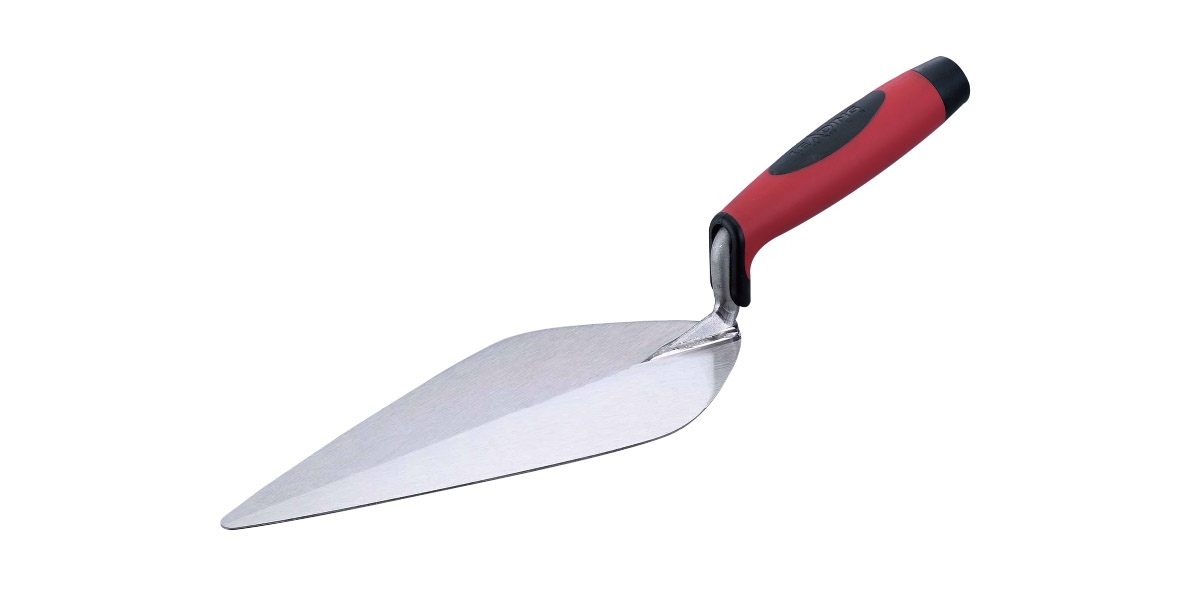
Narrow London Pattern Brick Trowel — CO2 Welded
Product Description
Product name: Narrow London Pattern Brick Trowel
Construction line: CO2 Welding Carbon Steel
Art. Nr (four sizes): 119721 (9"), 110721 (10"), 111721 (11"), 112721 (12").
The four art numbers are one product family in one blade pattern, differing only in blade length. They are supplied as a single range under the designation "Narrow London Pattern Brick Trowel / CO2 Welding Carbon Steel", alongside a second Narrow London line made as a one-piece forging.
Alternative construction. The same Narrow London blade shape is also built as Forged in One-piece High Carbon Steel in the same four sizes: 019721 (9"), 010721 (10"), 011721 (11"), 012721 (12"). The two constructions are set side by side under CO2 Welded vs. One-Piece Forged below, because construction is the main purchasing decision for this tool.
Related patterns in the Leading Tools range. Wide London Pattern Brick Trowel (forged 029721 / 020721–022721, CO2 welded 129721 / 120721–122721) and Philadelphia Pattern Brick Trowel (forged 009721 / 000721–002721, CO2 welded 109721 / 100721–102721), each with its own product description. Every pattern is offered in both constructions, so a buyer can hold construction constant and compare patterns, or hold the pattern constant and compare constructions.
"Brick trowel" is the generic term for the large, pointed trowel used to pick up, spread and furrow mortar when laying brick and block.
Blade shapes are named by pattern: the London pattern has a long, tapered blade with a rounded heel that carries mortar forward toward the point; the Philadelphia pattern has a wider blade that holds more mortar. Leading Tools offers the London pattern in two widths. "Narrow London" is the slimmer of the two, and this description covers its CO2-welded construction.
The construction line for this product is "CO2 Welding Carbon Steel". The blade and the neck are joined by CO2 welding. This is a different route from the one-piece forging used for the Narrow London Forged line.
In summary: the construction is CO2 welding, the blade is carbon steel with a polished finish, and the handle is a soft grip, BF21.
The Narrow London is the slimmer member of the London family: a long, tapered blade that runs to a fine point, with the rounded heel that gives the London pattern its handling character. Two things follow from that shape, and they are the reasons a mason chooses it:
Every trowel in this family has a polished carbon steel blade. Carbon steel is the traditional brick-trowel material, but it must be wiped dry and thinly oiled after use or it will rust. Stainless steel has high corrosion resistance and low maintenance; chlorinated water, coastal air or prolonged soaking can still cause rust spots, so rinse with clean water and dry after use.
Every trowel in this family carries the soft grip handle BF21, which is used across the Leading Tools brick trowel range.
The neck is a carbon steel part joined to the blade by CO2 welding.
This line puts the Narrow London blade shape into a CO2 welded construction. Leading Tools offers the same pattern in the same four sizes in two builds. Choosing the CO2 welded Narrow London instead of the forged one keeps the blade shape, the polished carbon steel, the soft grip handle and the size ladder, and changes only how blade and neck are joined.
For a professional daily-use specification, see CO2 Welded vs. One-Piece Forged below for when the forged line is the better fit.
The slim London blade suits work where the mortar bed and the joint are on show. It lays a clean, even bed, trims cleanly at the brick edge, and gives the mason a clear line of sight along the wall. That makes it a natural choice for face brickwork and finely coursed or decorative bonds.
The London pattern is the blade profile many masons are trained on, so a Narrow London feels familiar in the hand from the first course. For distributors, this is a pattern that sells on recognition: the buyer already knows what a London-pattern trowel is for.
All four sizes, 9", 10", 11", 12", are available in the CO2-welded build, so a distributor can stock a complete size ladder in one construction, rather than mixing constructions across sizes. That helps range presentation.
The BF21 soft grip needs no oiling, seasoning or splinter dressing, and it wipes clean with soap and water. For crews that hand tools around or work in wet conditions, that is a practical advantage over a wood handle.
| Situation | Use this tool? | Why |
|---|---|---|
| Laying standard clay brick | Yes | The London pattern gives the handling that brick masons are trained on |
| Face and exposed brickwork | Yes, 9"–10" | Controlled mortar loads and a clear view of the bed keep the joint clean |
| Fine or decorative coursing | Yes | Precise mortar placement along narrow bed faces |
| Buttering head joints | Yes | Buttering is a core brick trowel function |
| Concrete block and large stone units | Better suited to a wider pattern | The Wide London or Philadelphia carries more mortar per load |
| Tapping a brick into position | Yes, lightly | The blade can tap a brick into position; to break or cut brick use a brick hammer or bolster. Do not use the blade to pry brick |
| Pointing and repointing finished joints | No | Use a Tuck Pointing Trowel or a Brick Jointer from the Leading Tools range |
| Skimming or finishing plaster | No | Use a plaster trowel from the Leading Tools plaster trowel line |
| Mixing or lifting heavy material out of a tub | No | Prying and levering put side load on the blade |
| Step | Action | Detail |
|---|---|---|
| 1 | Condition the mortar | Mix to an oatmeal-like consistency, adding water gradually until it spreads smoothly |
| 2 | Load the blade | Pick up mortar from the board at a shallow approach angle; the slim blade gives a modest, controllable load |
| 3 | Spread the bed | Spread a bed roughly 1" thick and about three bricks long along the line of the wall |
| 4 | Furrow the bed | Draw the point of the trowel along the bed at about 45° to make a shallow trench, which helps the brick bond when it is pressed in |
| 5 | Butter the head joint | Pick up a daub on the blade and apply mortar to the end of the brick before placing |
| 6 | Place and bed the brick | Press the brick into position on the furrowed bed |
| 7 | Tap level | Tap the brick lightly with the trowel to seat it and bring it to line and level |
| 8 | Strike off | Draw the blade along the joint to remove squeezed-out mortar and return it to the board or the bed |
| 9 | Clean as you go | Do not let mortar dry on the blade: see Care & Maintenance below |
The pattern's defining working property is the slim, tapered blade. In practice that changes three things in the cycle above.
Loading. Each scoop carries less mortar than a wide pattern, so the mason makes more trips to the board per course but places each load more precisely. On face work that trade is worth making.
Spreading. A slimmer load is easier to lay as an even ribbon and leaves less squeeze-out to clean off the face. The mason can bring the bed to its full width in a couple of passes and keep the line straight.
Carrying forward. The London geometry carries mortar toward the point. Deliver mortar from the front third of the blade rather than tipping it off the heel.
Exposed brickwork is judged on the joint, so the bed must be even and the face must stay clean. Put down only as much mortar as the unit needs, strike off squeeze-out promptly rather than letting it stiffen, and never drag stiffened mortar across a face brick, because it smears.
Furrow or open the bed as the mortar and the unit require, and keep the course heights consistent. A 9" or 10" blade gives the finest control.
Decorative coursing and narrow bed faces benefit from the slim blade, which clears neighbouring faces and lets the mason see the bed. In these jobs the 9" (119721) is usually the most comfortable size.
Mortar consistency governs everything the blade does. Mix to a consistency that spreads smoothly and holds a furrow, adding water gradually. In hot or windy weather evaporation stiffens the bed before the brick goes down, so spread shorter beds: three bricks is already the working guide, and shorten them further rather than fighting stiffened material. Cold weather works the other way: below 4°C / 40°F hydration and setting slow down, so the priority is protecting the mortar from freezing.
Q1. What is the difference between the Narrow London and the Wide London pattern?
A. Both are London-pattern blades with the same handling family. The Narrow London is slimmer and carries a smaller, more controlled mortar load, while the Wide London is wider at the heel and carries more mortar per scoop. Choose the Narrow London for face work and fine coursing, and the Wide London where more mortar per load is wanted.
Q2. How is this CO2-welded line different from the forged Narrow London, and is it good enough for professional use?
A. Only the construction differs: the forged line is one piece of steel, while this CO2-welded line has the blade and neck made separately and joined by a weld, with the same blade shape and sizes.
The CO2-welded line suits light-to-moderate professional use; the forged line suits daily professional laying and heavier working loads. If a crack appears where the blade meets the neck, stop using the trowel and replace it.
Q3. Which size should I buy?
A. 10" (110721) is the general-purpose size. Go to 9" (119721) for tight spaces or if the operator tires quickly, and to 11"–12" (111721, 112721) for longer runs and a higher work rate.
Q4. Carbon steel or stainless steel?
A. This line is built in polished carbon steel only. Carbon steel must be wiped dry and thinly oiled after use or it rusts; stainless steel has high corrosion resistance and low maintenance, though chlorinated water, coastal air or prolonged soaking can still cause rust spots, so rinse with clean water and dry after use. Contact Leading Tools sales for stainless availability.
Q5. How do I keep the blade clean and free of rust?
A. Clean the blade immediately after use rather than at the end of the day, never with a wire brush or wire wheel, which scratches the blade surface; if mortar has set hard, remove it with a plastic scraper or a nylon brush without leaving the blade soaking for long periods, then dry it.
Always clean before oiling, because cement residue holds moisture against the steel and defeats the oil. Apply a thin film of tool oil, and hang the trowel on a rack or keep it in a tool box rather than in a damp, closed bag.
| Attribute | Specification |
|---|---|
| Product name | Narrow London Pattern Brick Trowel |
| Construction | CO2 Welding Carbon Steel |
| Blade material | Carbon steel, polished blade |
| Blade shape | Narrow London pattern: slim, tapered blade with a rounded heel and a pointed toe |
| Blade length range | 9"–12" (229–305 mm), four sizes |
| Neck | Carbon steel neck, joined to the blade by CO2 welding |
| Handle | Soft grip, BF21 |
| Surface finish | Polished blade face |
| Alternative construction, same blade shape | Forged in One-piece High Carbon Steel, 019721 / 010721 / 011721 / 012721, same four sizes |
Both Narrow London lines carry the same blade shape in the same four sizes. The difference is in how blade and neck are joined.
| Attribute | Forged (One-piece) | CO2 Welded (this product) |
|---|---|---|
| Construction line | Forged in One-piece High Carbon Steel | CO2 Welding Carbon Steel |
| Art. Nr, 9"–12" | 019721 / 010721 / 011721 / 012721 | 119721 / 110721 / 111721 / 112721 |
| Construction | Forged in one piece | CO2 welding |
| Blade-to-neck joint | None (one piece) | CO2 welded |
| Specify it when | Daily professional use with heavier working loads | General use with the same blade shape and size ladder |
Choosing between the two constructions:
Forged one-piece. Blade, heel and neck flow together in a single piece with no joint, which suits daily professional laying and heavier working loads.
CO2 welded. Blade and neck are joined by CO2 welding. As on any trowel, check the blade and handle regularly; on this line the blade-to-neck join is part of that check (see Care & Maintenance below).
Same working shape. The blade geometry, polished face, handle and sizes are the same in both lines, so for light-to-moderate duty the CO2-welded build delivers the same working shape.
Buyers usually choose pattern before size, and Leading Tools carries each pattern in both constructions.
| Pattern | Blade character | Work it is suited to |
|---|---|---|
| Narrow London Pattern Brick Trowel (this product; forged 019721 / 010721 / 011721 / 012721, CO2 welded 119721 / 110721 / 111721 / 112721) | Slim, tapered blade with a rounded heel; smaller, controlled mortar loads | Face brickwork, tight coursing, standard clay brick |
| Wide London Pattern Brick Trowel (forged 029721 / 020721 / 021721 / 022721, CO2 welded 129721 / 120721 / 121721 / 122721) | Wider at the heel than the Narrow London; carries more mortar per load | Brick and wider units, with London handling |
| Philadelphia Pattern Brick Trowel (forged 009721 / 000721 / 001721 / 002721, CO2 welded 109721 / 100721 / 101721 / 102721) | Wider blade that holds more mortar per load | Concrete block and larger stone units |
As a rule of thumb: choose the pattern by the unit you are laying, the construction by how hard the tool will be worked, and the size by the operator. Clay brick and face work go to the Narrow London, wider units to the Wide London, and block and large stone to the Philadelphia.
| Question | If yes | If no |
|---|---|---|
| Is the work mainly clay brick, especially face or exposed brickwork? | Narrow London, this product | Consider the Wide London or Philadelphia |
| Do you need to place small, controlled mortar loads in tight spots or fine coursing? | Narrow London | Either |
| Is the crew laying brick with occasional wider units? | Wide London (see its own product description) | Narrow London |
| Is the work mostly concrete block or large stone units? | Philadelphia (see its own product description) | Narrow London |
| Question | If yes | If no |
|---|---|---|
| Will the tool be used daily by a professional? | Specify the forged line, 019721–012721 | The CO2-welded line is a reasonable fit |
| ART.NR | Blade length | Where it fits |
|---|---|---|
| 119721 | 9" (229 mm) | Smallest and lightest of the four; tight coursing and confined work |
| 110721 | 10" (254 mm) | General-purpose size |
| 111721 | 11" (279 mm) | Longer reach and higher work rate on standard brick and face work |
| 112721 | 12" (305 mm) | Longest of the four; long runs and experienced operators |
Sizing by operator. A beginner who tires quickly, or anyone working in confined spaces, should go shorter; a larger operator or a faster crew can go longer. If in doubt, 10" is a sound general-purpose choice.
Sizing by unit and joint.
This line is built in polished carbon steel only. Carbon steel must be wiped dry and thinly oiled after use or it rusts; stainless steel has high corrosion resistance and low maintenance, though chlorinated water, coastal air or prolonged soaking can still cause rust spots, so rinse with clean water and dry after use. Contact Leading Tools sales for stainless availability.
Every art number in this family carries the soft grip handle BF21. Other handles can be fitted on request: contact Leading Tools sales.
All four art numbers for the Narrow London Pattern Brick Trowel — CO2 Welded.
| ART.NR | Size | Metric | Blade material & finish | Construction | Handle |
|---|---|---|---|---|---|
| 119721 | 9" | 229 mm | Carbon steel, polished | CO2 Welding | Soft grip, BF21 |
| 110721 | 10" | 254 mm | Carbon steel, polished | CO2 Welding | Soft grip, BF21 |
| 111721 | 11" | 279 mm | Carbon steel, polished | CO2 Welding | Soft grip, BF21 |
| 112721 | 12" | 305 mm | Carbon steel, polished | CO2 Welding | Soft grip, BF21 |
Cross-reference: same blade shape, forged construction:
| ART.NR | Size | Construction |
|---|---|---|
| 019721 | 9" (229 mm) | Forged in One-piece High Carbon Steel |
| 010721 | 10" (254 mm) | Forged in One-piece High Carbon Steel |
| 011721 | 11" (279 mm) | Forged in One-piece High Carbon Steel |
| 012721 | 12" (305 mm) | Forged in One-piece High Carbon Steel |
Inch-to-millimetre conversions use 1" = 25.4 mm. The size is the nominal blade length.
Carbon steel is the material that makes this tool feel right and the material that punishes neglect. Daily cleaning is the single highest-value maintenance action.
| Step | Action | Note |
|---|---|---|
| 1 | Knock excess mortar off the blade against a wooden board or bucket edge | Do it while the mortar is still fresh |
| 2 | Remove dried mortar with a plastic scraper | Do not chip it off with a steel tool, and do not leave the blade soaking for long periods |
| 3 | Brush the residue off with a stiff nylon brush | Never a wire brush or wire wheel: it scratches the blade surface |
| 4 | Dry the blade thoroughly with a cloth | Do not leave it wet |
| 5 | Oil the blade | Apply a thin film of tool oil and wipe off the excess |
| 6 | Store it hung or boxed | Hang the trowel on a tool rack or keep it in a designated tool box to prevent damage |
Mortar that hardens on the blade holds moisture against the steel and causes rust, which is why cleaning is a same-day job rather than a weekly one.
Check the trowel regularly for signs of wear such as cracks in the handle or chips in the blade. On this tool, also check the blade-to-neck join.
| Issue | Symptom | Action |
|---|---|---|
| Surface rust | Light orange-brown spotting on the blade | Remove with a fine abrasive, then oil immediately |
| Chipped or deformed blade edge | Blade edge no longer straight; chips at the toe | Dress lightly if minor; replace if the damage is structural |
| Crack at the blade-to-neck join | Visible line, gap or movement at the join | Stop using the tool and replace it. |
| Loose handle | Handle rotates or wobbles on the tang | Take the tool out of service; a handle that moves under a tapping load is an injury risk |
| Cracked handle | Splits or cracks in the grip | Replace the tool; do not work with a cracked handle |
| Soft grip damage | Cuts, tears or hardening of the grip | Replace: a damaged soft grip cannot be repaired |
The BF21 soft grip needs less maintenance than a wood handle. Wipe it clean with mild soap and water if it becomes contaminated or sticky, rinse and dry it, and inspect the grip for cuts and hardening. Cement dust left in the grip texture is abrasive against the palm and shortens grip life, so cleaning the handle is worth the thirty seconds it takes.
The blade edge is used for trimming and striking off, and it dulls and chips with use. Dress it with a fine single-cut file or a fine stone, following the original factory bevel, stroking in one direction and oiling afterward. Do not reprofile the edge into something the factory did not grind: the way the blade releases mortar depends on the original shape.
A brick trowel is a consumable in professional use. Replace the tool rather than repairing it when: the blade-to-neck join shows any crack; the blade has lost enough material to repeated dressing that it no longer meets the line; the handle is cracked; or rust pitting has gone below the surface. Do not attempt to repair a cracked join; replace the tool.

In compliance with EU personal data protection laws, we are committed to protecting and providing you with control over your personal data. By clicking "Accept All", you allow us to place cookies to enhance your experience on this site, help us analyze site performance and usage, and enable us to deliver relevant marketing content. You can manage your cookie settings below. By clicking "Agree" you agree to the current settings. For more information, please visit the Privacy Statement.
This website uses cookies
In compliance with EU personal data protection laws, we are committed to protecting your personal data and providing you with control over it. By clicking "Agree", you allow us to place cookies to improve your experience on this site, help us analyze site performance and usage, and allow us to deliver relevant marketing content.
By clicking "Only necessary" you allow us to place only necessary cookies. The website cannot function without these cookies and you cannot switch them off on your system. These cookies are typically set only in response to an action you perform (i.e. a service request), such as setting privacy preferences, logging in, or filling in a form. You can set your browser to block or prompt you for these cookies, but this may prevent some site features from working.