
Copyright 2026 © Leading Tools Industrial Co., Ltd.
All Rights Reserved. Website Design by Awakening Design
CATALOG TYPE
Product Categories
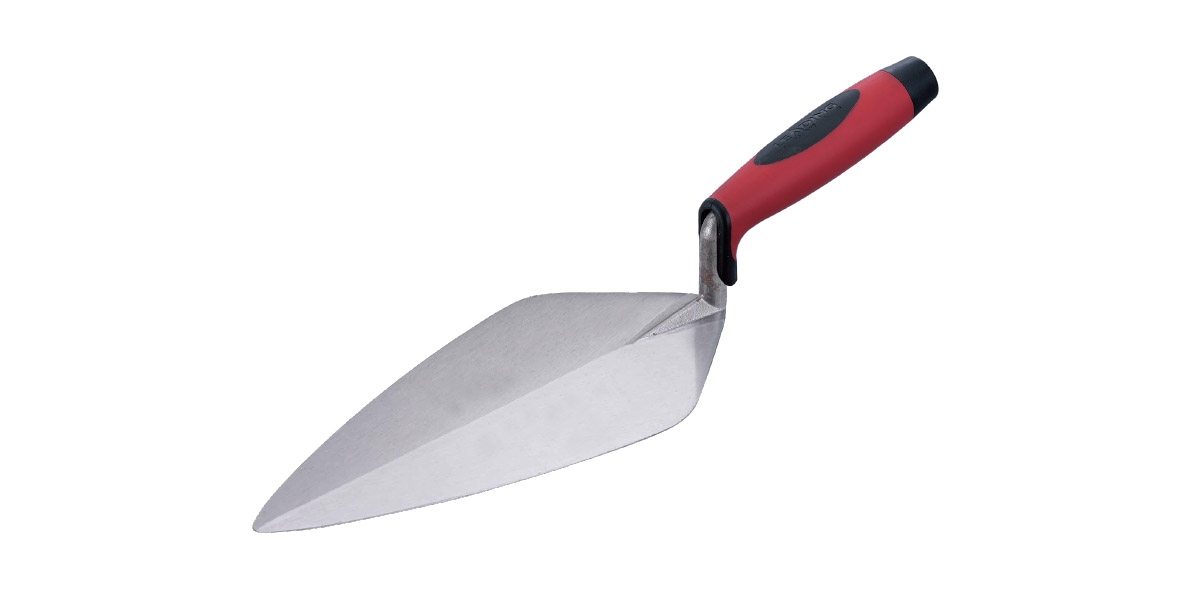
Narrow London Pattern Brick Trowel — Forged
Product Description
Product name: Narrow London Pattern Brick Trowel — Forged
Construction line: Forged in One-piece High Carbon Steel
Art. Nr (four sizes): 019721 (9"), 010721 (10"), 011721 (11"), 012721 (12").
The four art numbers are one product family in one blade pattern, differing only in blade length. All four are supplied under the same designation "Narrow London Pattern Brick Trowel / Forged in One-piece High Carbon Steel" and all four carry the same soft grip handle, BF21.
"London pattern" is one of the two classic brick trowel shapes, the other being the Philadelphia pattern. The London shape is long and elongated with a rounded heel, and it is made in a narrow and a wide version. "Narrow London" is the narrower of the two: it is the standard shape for laying clay brick.
| Item | Pattern | Construction |
|---|---|---|
| This product | Narrow London | Forged in One-piece High Carbon Steel |
| Sister product with the same blade shape | Narrow London | CO2 Welding Carbon Steel (separate product) |
| Sister product, wider heel | Wide London | Forged / CO2 Welding (separate products) |
| Sister product, square heel | Philadelphia | Forged / CO2 Welding (separate products) |
The standard brick laying shape, in a forged build. The Narrow London is a standard pattern for laying clay brick. Leading Tools offers all three brick trowel patterns, and the Narrow London is the lightest and most controllable of them. A mason who makes the same pass many times a day benefits from a blade that carries only as much mortar as the course needs.
One piece, no joint at the heel. Blade, shank and handle tang are formed from one piece of high carbon steel, so there is no joint at the heel. In the Leading Tools range the welded alternative is offered as a separate CO2 Welding line, so the buyer chooses between two constructions of the same blade shape rather than between two different tools.
Blade flex that is built in. The blade is taper ground and polished for both sturdiness and flexibility. A blade of uniform thickness cannot be firm at the heel and springy at the tip at the same time; a tapered blade can. The result is a tool that feels alive in the hand and recovers cleanly after each pass.
A stronger impact area. A trowel is tapped against brick to bed the unit, and it knocks against board, bucket and scaffold all day. The forging is made with a reinforced impact area so that this everyday knocking does not wear out the tool early.
Light and precise. Because the narrow blade is the lightest of the London family, it is the natural choice for long working days, for detailed work, and for any job where the mason wants to place a small bed of mortar exactly where it is needed.
A clear step in the Leading Tools range. The Narrow London sits next to the Wide London (more mortar, same London character) and the Philadelphia (the most mortar, for block and large units). The same four lengths, 9" to 12", are offered in the Narrow London and Wide London, so a crew can switch pattern without changing the length it is used to.
Primary use. Loading, spreading and striking off mortar beds on brick; buttering ends and head joints; placing and tapping units into line; trimming excess mortar from the joint.
| Task | Use the Narrow London Forged? | Notes |
|---|---|---|
| Spreading a mortar bed on brick courses | Yes, primary duty | The pattern's core function |
| Face brickwork and exposed brick | Yes | A small, even bed is easy to control and keeps the face clean |
| Buttering head joints and brick ends | Yes | Turn the trowel over and draw the mortar along the edge of the unit |
| Striking off excess mortar and trimming the joint | Yes | Done with the blade edge |
| Tapping a brick into position | Yes, lightly | The blade can tap a brick into position; the forged blade edge is suitable for cutting brick. Do not use the blade to pry brick or as a pry bar |
| Laying concrete block all day | Consider Philadelphia instead | Philadelphia carries the most mortar per load |
| Laying units wider than standard brick | Consider Wide London instead | Wider heel, more mortar per load |
| Finishing and tooling mortar joints | No | Use a Brick Jointer or a Tuck Pointing Trowel |
| Prying, levering or chiselling | No | Side load is what damages a trowel |
| Step | Action |
|---|---|
| 1 | Hold the handle lightly, with the thumb resting on top of the handle. A tight grip causes fatigue; the tool does not |
| 2 | Approach the mortar board at a shallow angle and cut off a load with the blade |
| 3 | Carry the load to the course. The Narrow London carries mortar toward the front of the blade, so keep the blade level |
| 4 | Lay the bed by rolling the wrist sideways and drawing the blade down and along, which spreads the load along the course |
| 5 | Strike off the excess with a short, quick downward movement and stop the movement cleanly at the end of the stroke |
| 6 | Furrow or open the bed as the mortar and the unit require, then set the unit and tap it to line and level with the hard end-cap at the butt of the handle |
| 7 | To butter a head joint or a brick end, turn the trowel over and draw mortar along the edge of the unit with the underside of the blade |
| 8 | Cut off squeezed-out mortar with the blade edge and return it to the board |
| 9 | Change the blade angle by rolling the handle with the thumb rather than by rotating the wrist on every pass |
Correcting unit position (handle end-cap). After the unit is placed, tap lightly with the hard end-cap at the butt of the handle to correct position and level; do not strike with the blade. The forged blade edge remains suitable for cutting brick.
On exposed work the bed has to be even along the full width of the unit, because any inconsistency shows on the finished face. The Narrow London places a controlled, even bed without excess, and the long toe lets the mortar be drawn to the edge of the unit. Strike off cleanly so the surplus leaves the bed instead of being dragged along it, which keeps the brick face clean and saves cleaning work later.
For a crew that lays brick for the whole day, the light weight of the Narrow London is the main advantage. Each pass is a small effort, and over a full day the difference in fatigue adds up. Pair it with a loose grip and with rolling the handle under the thumb instead of rotating the wrist, which is the single change that most reduces wrist load over a working day.
Turn the trowel over and draw the mortar along the edge of the unit with the underside of the blade. Roll the handle with the thumb to set the blade angle for the turn rather than rotating the wrist.
Q: What is the difference between Narrow London and Wide London?
A: The heel. The Narrow London heel is narrower, so the blade holds less mortar per load and the tool is lighter and more controllable; the Wide London heel is wider and holds more mortar. Leading Tools offers both in the same four lengths, 9"–12".
Q: Narrow London or Philadelphia?
A: Philadelphia has a square heel set farther back and carries the most mortar, which is why it suits concrete block and larger units. Narrow London is the pattern for standard clay brick, so specify the Narrow London if the customer lays brick and the Philadelphia if they lay block all day.
Q: What are the four sizes?
A: 019721 (9"), 010721 (10"), 011721 (11") and 012721 (12"). The 10" is an all-round size for general brick laying; the 9" suits detail work and the 12" gives the fastest coverage.
Q: What is the blade made of, and how does it feel?
A: It is forged in one piece from high carbon steel, with a taper-ground, polished blade. Taper grinding makes the blade firm at the heel and flexible toward the tip, which gives a good trowel its feel. All four art numbers come on the soft grip handle BF21; other handles can be fitted on request, so contact Leading Tools sales.
Q: How do I keep the blade clean and protect it from rust?
A: Wash and dry the blade after every use rather than at the end of the job, and oil it; if residue has already set, remove it with a plastic scraper or a nylon brush first, without leaving the blade soaking for long periods.
If rust spots still appear, the blade was not fully dry before oiling, cement residue was left under the oil film, or the tool is stored somewhere damp. Remove the rust, dry thoroughly, oil again and store dry.
The Narrow London Forged line is produced from a single piece of high carbon steel, shaped so that blade, shank and handle tang are one integrated part. The construction is specified as "Forged in One-piece High Carbon Steel".
Two structural effects of one-piece forging matter to a buyer:
The pattern is defined by how much mortar the blade holds and where it releases it. The comparison below is qualitative; it shows how the three Leading Tools patterns relate to each other.
| Geometric feature | Narrow London | Wide London | Philadelphia |
|---|---|---|---|
| Heel width | Narrowest of the three | Wider than the Narrow London | Widest |
| Heel shape | Rounded | Rounded to moderately square | Square, set farther back |
| Mortar per load | Least of the three | More than Narrow London, less than Philadelphia | Most of the three |
| Where mortar sits | Farther forward on the blade | Forward on the blade | Deep at the heel |
| Toe | Pointed, long and narrow | Pointed | Pointed |
| Typical work | Standard clay brick, detail work | Brick and wider units | Concrete block and large units |
The long, pointed toe is what lets the Narrow London reach into a joint without disturbing the units beside it.
All four Narrow London Forged sizes are supplied on the same handle: the soft grip BF21. Other handles can be fitted on request: contact Leading Tools sales.
| Attribute | Specification |
|---|---|
| Product name | Narrow London Pattern Brick Trowel |
| Construction | Forged in One-piece High Carbon Steel |
| Material | High carbon steel, polished blade |
| Blade shape | Narrow London pattern: long, elongated blade, rounded heel, pointed toe |
| Blade surface | Taper ground and polished |
| Size range | 9" – 12" (229–305 mm), four sizes |
| Shank | Carbon steel shank, forged in one piece with the blade and tang |
| Handle | Soft grip, BF21 |
| Alternative construction, same blade shape | CO2 Welding Carbon Steel (separate product) |
Both lines share the Narrow London blade shape and the same four sizes. The difference is in how blade and shank are joined.
| Attribute | Forged (One-piece) | CO2 Welded |
|---|---|---|
| Construction line | Forged in One-piece High Carbon Steel | CO2 Welding Carbon Steel |
| Sizes | 9", 10", 11", 12" | 9", 10", 11", 12" |
| Construction | Forged in one piece | CO2 welding |
| Blade-to-shank joint | None (one piece) | CO2 welded |
| Specify it when | Daily professional use that takes knocks | General use in the same blade shape and sizes |
| Pattern | Forged Art. Nr | Work it is designed for |
|---|---|---|
| Philadelphia Pattern Brick Trowel | 009721 / 000721 / 001721 / 002721 (9"–12"); 003721–007721 (4-1/2"–7") | Concrete block and larger units, where the course needs the most mortar |
| Wide London Pattern Brick Trowel | 029721 / 020721 / 021721 / 022721 (9"–12") | Brick and wider units, more mortar while keeping the London blade feel |
| Narrow London Pattern Brick Trowel | 019721 / 010721 / 011721 / 012721 (9"–12") | Standard clay brick and detail work |
A rule of thumb for the sales counter: the material chooses the pattern, the operator chooses the size. Block and large units go Philadelphia, standard clay brick goes Narrow London, and Wide London is the answer when the customer wants more mortar capacity without leaving the London family.
| ART.NR | Size | Metric (1" = 25.4 mm) | Blade material & finish | Handle | Typical use (guidance) |
|---|---|---|---|---|---|
| 019721 | 9" | 229 mm | High carbon steel, polished | Soft grip BF21 | Lightest size; detail work and tight spots |
| 010721 | 10" | 254 mm | High carbon steel, polished | Soft grip BF21 | All-round size for general brick laying |
| 011721 | 11" | 279 mm | High carbon steel, polished | Soft grip BF21 | Face brickwork and longer runs of course |
| 012721 | 12" | 305 mm | High carbon steel, polished | Soft grip BF21 | Longest blade; fastest coverage on open, repetitive work |
By work rate. A longer blade moves more mortar per pass and therefore lays faster, at the cost of a higher load on the wrist on every pass. Where a customer lays all day, that trade-off is the deciding factor, and it is worth putting two sizes in their hand rather than recommending one.
By work type. Short blades give the most control: use a 9" or 10" where the work is detailed, the joints are narrow or the space is restricted. Long blades give the most reach and coverage: use an 11" or 12" on open walls where the same pass is repeated many times.
By operator. Grip pressure, not blade size, is the main cause of hand fatigue; hold the trowel lightly with the thumb on top of the handle. A customer who complains of fatigue should be asked about grip before being sold a smaller blade.
Pattern is chosen before length, and the question to ask the customer is what they lay, not what they are used to.
| Customer says | Recommend | Why |
|---|---|---|
| "Standard clay brick, all day" | Narrow London | Least mortar per load and the lightest tool for the highest number of passes |
| "Face brickwork or fine, tight laying" | Narrow London | The narrow blade places a small, even bed and keeps the face clean |
| "Brick, but I want to carry more mortar" | Wide London | Wider heel raises mortar capacity while the blade still behaves like a London |
| "Block and large units" | Philadelphia | Widest blade and a square heel, the most mortar per pick-up |
| "The tool takes a lot of knocks" | Narrow London Forged | One-piece construction and a reinforced impact area |
All four Narrow London Forged art numbers ship on the soft grip handle BF21. Other handles can be fitted on request: contact Leading Tools sales.
All art numbers for this product, complete. The CO2-welded Narrow London is a separate product.
| ART.NR | Size | Metric | Blade material / finish | Handle |
|---|---|---|---|---|
| 019721 | 9" | 229 mm | High carbon steel, polished | Soft grip, BF21 |
| 010721 | 10" | 254 mm | High carbon steel, polished | Soft grip, BF21 |
| 011721 | 11" | 279 mm | High carbon steel, polished | Soft grip, BF21 |
| 012721 | 12" | 305 mm | High carbon steel, polished | Soft grip, BF21 |
| Attribute | Specification |
|---|---|
| ART.NR | 019721 (9"), 010721 (10"), 011721 (11"), 012721 (12") |
| Manufacturing process | Forged in one piece |
| Material | High carbon steel |
| Blade finish | Taper ground and polished |
| Blade shape | Narrow London pattern, long, narrow blade, rounded heel, pointed toe |
| Shank | Forged in one piece with blade and tang |
| Handle | Soft grip BF21 |
| Size range | 9"–12" (229–305 mm) |
Carbon steel rusts, and mortar left on the blade holds moisture against it. Clean the trowel straight after use, not at the end of the week.
Inspect the blade for bending and the handle for looseness on a regular schedule, and replace the tool if either is found.
| Issue | Symptom | Action |
|---|---|---|
| Surface rust | Light orange-brown spots | Remove with fine abrasive, then oil immediately |
| Blade bent | Blade no longer flat, edge not straight | Replace |
| Crack near the shank | Visible crack where blade and shank meet | Stop using the tool and replace it |
| Loose handle | Handle rotates or wobbles on the tang | Replace; a handle that moves under load is a hand injury risk |
| Handle damage | Grip split, torn or hardened | Replace the tool; a damaged soft grip cannot be repaired |
| Mortar sticks to the blade | Fresh mortar will not release cleanly | Clean off cured residue with a nylon brush and water, dry, then oil |

In compliance with EU personal data protection laws, we are committed to protecting and providing you with control over your personal data. By clicking "Accept All", you allow us to place cookies to enhance your experience on this site, help us analyze site performance and usage, and enable us to deliver relevant marketing content. You can manage your cookie settings below. By clicking "Agree" you agree to the current settings. For more information, please visit the Privacy Statement.
This website uses cookies
In compliance with EU personal data protection laws, we are committed to protecting your personal data and providing you with control over it. By clicking "Agree", you allow us to place cookies to improve your experience on this site, help us analyze site performance and usage, and allow us to deliver relevant marketing content.
By clicking "Only necessary" you allow us to place only necessary cookies. The website cannot function without these cookies and you cannot switch them off on your system. These cookies are typically set only in response to an action you perform (i.e. a service request), such as setting privacy preferences, logging in, or filling in a form. You can set your browser to block or prompt you for these cookies, but this may prevent some site features from working.