
Copyright 2026 © Leading Tools Industrial Co., Ltd.
All Rights Reserved. Website Design by Awakening Design
CATALOG TYPE
Product Categories
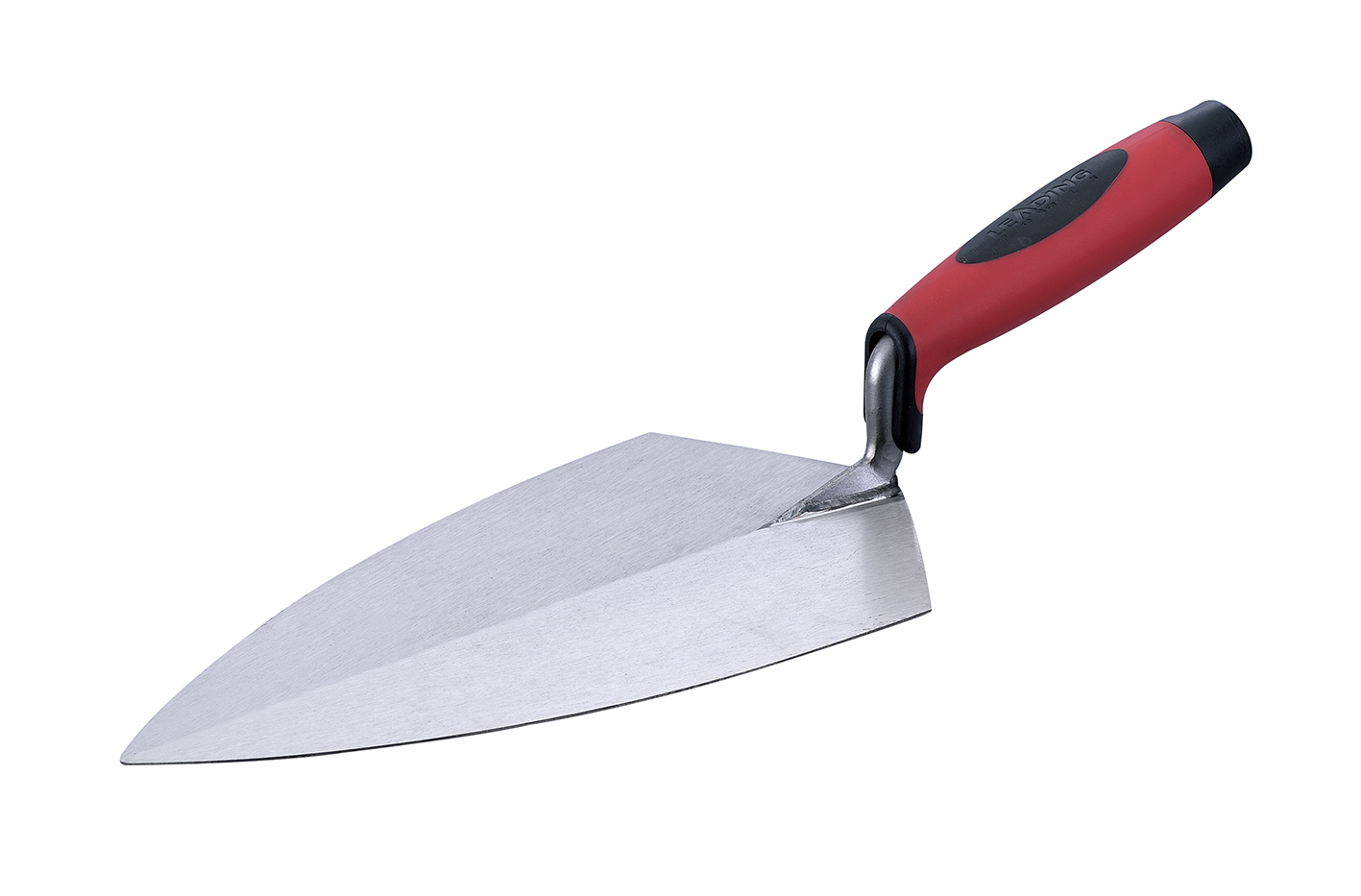
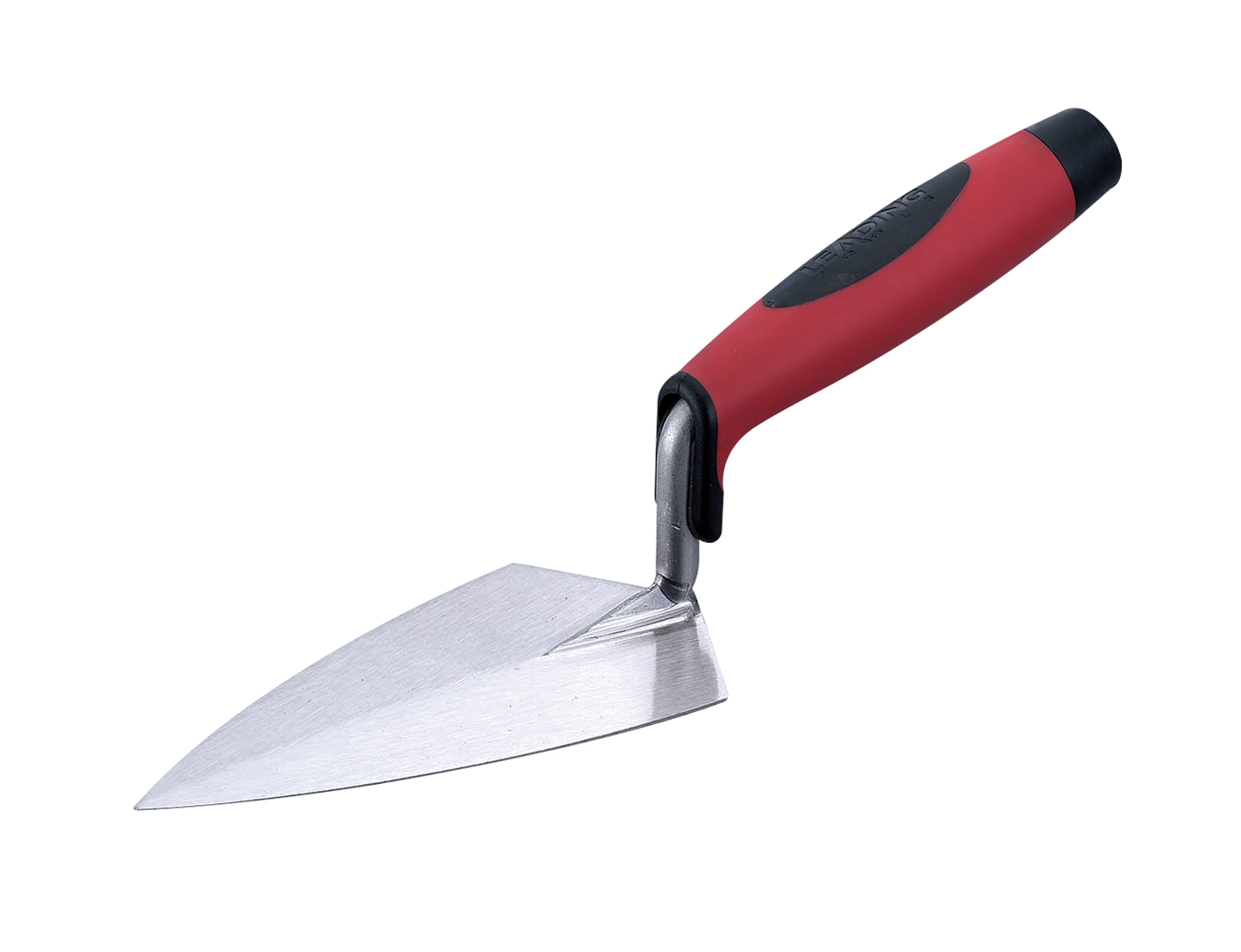
Philadelphia Pattern Brick Trowel — CO2 Welded
Product Description
Product name: Philadelphia Pattern Brick Trowel
Construction line: CO2 Welding Carbon Steel
Full name: Philadelphia Pattern CO2 Welded Brick Trowel
Art. Nr (nine sizes): 109721 (9"), 100721 (10"), 101721 (11"), 102721 (12"), 103721 (4-1/2"), 104721 (5"), 105721 (5-1/2"), 106721 (6"), 107721 (7").
The nine art numbers are one product family listed as two size groups: 9" to 12" and 4-1/2" to 7". Both belong to the same line, Philadelphia Pattern Brick Trowel / CO2 Welding Carbon Steel. This line is the welded counterpart of the forged Philadelphia line (009721, 000721–007721), and the two lines match one for one across all nine sizes.
Other handles can be fitted on request; contact Leading Tools sales.
A full professional size range. Leading Tools offers the CO2 welded line alongside the forged line with the same pattern, the same nine sizes, the same blade material class and the same soft grip handle; the difference is construction alone. The welded line carries the identical Philadelphia geometry across the whole 4-1/2"–12" span.
The geometry does the work, and the geometry is unchanged. Mortar capacity, spreading behaviour and buttering control on a brick trowel come from blade pattern: heel width, blade depth, toe shape, not from how the blade is attached to the shank. Everything the Philadelphia pattern is specified for is present in this line: the wide square heel that picks up a full bed's worth of mortar in one dip, the pointed toe for head joints, and the deep blade that tracks steadily across a bed.
Built for the higher-volume material. The Philadelphia pattern exists because concrete block and larger stone units take more mortar per course than a standard clay brick, and the pattern is designed for laying block with a larger mortar charge.
Carbon steel blade. The blade is polished carbon steel; it rusts if left wet, so it must be dried and oiled after use.
Soft grip handle across all nine sizes. Every art number in this line is supplied with the BF21 soft grip handle.
Primary use. Loading and carrying mortar; spreading and furrowing full bed joints; buttering head joints; striking off and levelling; placing and tapping units to line and level.
The two constructions. In the CO2 welded line, blade and shank are fabricated separately and joined by weld; the forged line (009721, 000721–007721) is one forged piece. See the Selection Guide below.
| Situation | Use this trowel? | Why |
|---|---|---|
| Laying concrete block (CMU) or larger stone units | Yes, 11"–12" (101721, 102721) | The Philadelphia pattern is specified for the larger mortar charge these units take per course |
| High-volume repetitive bed laying | Yes, 10"–12" | Wide square heel picks up a fuller load, so fewer returns to the board |
| Laying standard clay brick | Yes at 9"–10", but compare | Works well; the Narrow London pattern is the one purpose-built for clay brick |
| Spreading and furrowing a bed joint | Yes | Core operation: 30° spread, then furrow with the point |
| Buttering head joints | Yes | The pointed toe is the reason the pattern has one |
| Striking off and levelling a bed | Yes | Standard use of the same blade face |
| Tapping units to line and level | Yes | Tap with the blade; the soft-grip handle is impact-resistant PP, fine for occasional tapping but not as a regular striking face |
| Confined openings, patching, apprentice practice | Yes, 4-1/2" to 7" (103721–107721) | The short sizes in the same pattern |
| Breaking or cutting brick | No | The blade can lightly tap a brick into position; use a brick hammer or chisel to break or cut brick |
| Prying, levering, striking hard surfaces | No | Not a use for any brick trowel |
| Pointing or jointing a finished joint | No | Pressing and compacting mortar into the joint is done with a Tuck Pointing Trowel or a Brick Jointer |
| Step | Action | Detail |
|---|---|---|
| 1 | Load | Dip the blade into the mortar on the board or in the pan and pick up on the wide square heel. The heel is the loading surface, and it is why this pattern carries a fuller charge than a narrow-profile blade |
| 2 | Lay the bed | Hold the blade at roughly 30° and lay a mortar bed about 1 inch thick and about three bricks long |
| 3 | Furrow | Run the point of the trowel down the centre of the bed to open a furrow, so the mortar distributes evenly when the unit is pressed in |
| 4 | Butter the head joint | Butter the end (head) face of the new brick with mortar, which is what forms the vertical joint |
| 5 | Place the unit | Press the unit down into the bed. If it is not the first brick in the course, push its buttered face up against the brick already laid |
| 6 | Tap to line and level | Tap the unit with the blade to correct position and level |
| 7 | Strike off | Cut the squeezed-out mortar away with the blade rather than wiping it across the face |
| 8 | Keep the blade clean | Clear mortar off the blade as you work; residue that sets on the face spoils release and, on carbon steel, starts corrosion under the deposit |
This sequence, 30° spread, furrow, butter, place, tap to level, is the standard method.
Pointed toe → directional control. The narrow front section places mortar where you aim it: into a head joint, into a tight return, into a partly filled head joint. This is the geometric difference the pattern is identified by.
Wide square heel → mortar volume. The squared heel is the loading platform, and it is the most visible difference between the Philadelphia and the London pattern's rounded heel. More mortar per dip means fewer returns to the board and a steadier laying rhythm over a course.
Deep blade → steady bed tracking. A fuller blade body carries and spreads a bed with less wobble than a slim profile, which is why this pattern is put in front of block and larger units rather than only clay brick.
It does not change loading, spreading, furrowing, buttering or striking off. Those are blade-geometry operations and the blade is the same as the forged line's.
The one difference is construction: blade and shank are joined by a weld. In practice this comes down to two working habits rather than a limitation on normal laying:
Standard clay brick wall construction. The pattern carries enough mortar for continuous bed laying while the toe handles head-joint buttering, which suits repetitive coursing where rhythm and consistency drive the day's output. Take 9" or 10" (109721, 100721). If the crew works exclusively in standard clay brick, also consider the Narrow London line, which is the pattern designed for that material.
Concrete block and larger stone. This is the substrate the Philadelphia pattern is designed for, because of the larger mortar volume each course takes. Take 11" or 12" (101721, 102721).
Repair, patching and partial rebuild. The 4-1/2" to 7" sizes (103721–107721) are manageable inside tight repair zones, short wall returns and partial rebuilds where a full-size blade is oversized.
Crew and site issue. The blade-to-shank weld should be added to the crew's routine tool check.
Q: What is the practical difference between the CO2 welded and the forged version of this trowel?
A: The blade is the same: same Philadelphia pattern, same nine sizes, same carbon steel polished blade, same soft grip handle. The forged line is made from one piece of steel with no joint, while this line joins blade and shank with a weld.
Q: Which one should I actually order?
A: Both lines have the same blade, sizes and handle. Order the CO2 welded line (109721, 100721–107721) if the welded construction is acceptable and the weld will be included in the routine tool check; order the forged line (009721, 000721–007721) if you prefer a one-piece blade and shank with no weld to inspect.
Q: Why choose the Philadelphia pattern rather than a London pattern?
A: The Philadelphia has a pointed toe and a wide, square heel, which lets it pick up a bigger charge of mortar. That is why it is used for concrete block and larger stone units, while the narrower, round-heeled London is used for standard clay brick. Leading Tools offers Narrow London and Wide London in both constructions.
Q: What size should I order?
A: 9" to 11" covers most professional laying. Take 11"–12" for block and larger stone, 9"–10" for standard clay brick, and the 4-1/2"–7" sizes for repair, confined access and training.
Q: Can I use it to cut brick?
A: Not with the blade. The blade can lightly tap a brick into position; break or cut brick with a brick hammer or chisel, and do not pry with the blade or use it as a lever. This applies to both the CO2 welded and the forged line.
The construction of this line is specified as "CO2 Welding Carbon Steel". The blade and the shank are produced as separate parts and joined by CO2 welding.
The construction does not change what the Philadelphia pattern is for, how it is used, or how much mortar it carries; those are set by blade geometry.
| Attribute | Specification |
|---|---|
| Product name | Philadelphia Pattern Brick Trowel |
| Construction | CO2 Welding Carbon Steel |
| Construction type | Blade and shank fabricated separately, joined by CO2 welding |
| Blade material | Carbon steel, polished blade |
| Blade pattern | Philadelphia: wide square heel, deep cross-section, pointed toe |
| Blade length range | 4-1/2" – 12" (114–305 mm), nine sizes |
| Handle | Soft grip, BF21 |
| Alternative construction, same blade | Forged in One-piece High Carbon Steel, 009721, 000721–007721, same nine sizes |
Both lines carry the identical Philadelphia pattern in the identical nine sizes. Everything in the table below is downstream of one decision: whether blade and shank are one piece of steel or two pieces joined by a weld.
| Attribute | CO2 Welded (this line) | Forged (One-piece) |
|---|---|---|
| Construction line | CO2 Welding Carbon Steel | Forged in One-piece High Carbon Steel |
| Art. Nr, 9"–12" | 109721 / 100721 / 101721 / 102721 | 009721 / 000721 / 001721 / 002721 |
| Art. Nr, 4-1/2"–7" | 103721 / 104721 / 105721 / 106721 / 107721 | 003721 / 004721 / 005721 / 006721 / 007721 |
| Blade pattern and sizes | Philadelphia, nine sizes 4-1/2"–12" | Philadelphia, nine sizes 4-1/2"–12", identical |
| Blade material and finish | Carbon steel, polished | Carbon steel, polished, identical |
| Handle | Soft grip, BF21 | Soft grip, BF21, identical |
| Joint between blade and shank | Joined by CO2 welding | None; blade and shank are one piece |
| Note | Include the weld in the routine tool check | One-piece forged construction |
The blade is the same, so the work is the same; the only difference is whether blade and shank are one piece or joined by a weld.
Buyers usually choose pattern before construction and before size, and Leading Tools offers all three patterns in both constructions.
| Pattern | CO2 welded Art. Nr | Forged Art. Nr | Blade character | Work it is designed for |
|---|---|---|---|---|
| Philadelphia Pattern Brick Trowel | 109721 / 100721 / 101721 / 102721 (9"–12"), 103721–107721 (4-1/2"–7") | 009721 / 000721 / 001721 / 002721 (9"–12"), 003721–007721 (4-1/2"–7") | Wide blade, square heel, pointed toe, high mortar volume per load | Concrete block and larger stone units; high-volume bed laying |
| Narrow London Pattern Brick Trowel | 119721 / 110721 / 111721 / 112721 (9"–12") | 019721 / 010721 / 011721 / 012721 | Narrower blade, rounded heel, rounded or half-pointed tip, cranked handle | Standard clay brick |
| Wide London Pattern Brick Trowel | 129721 / 120721 / 121721 / 122721 (9"–12") | 029721 / 020721 / 021721 / 022721 | Widened London blade; carries more mortar than the narrow London | Work needing more mortar than clay brick, with a London feel |
The two lines share the same blade geometry and differ in how blade and shank are joined, so take this decision first.
The CO2 welded line (109721, 100721–107721) covers:
The forged line (009721, 000721–007721):
Choose Philadelphia when mortar volume per pass is the priority: concrete block, larger stone units, deeper bed joints, high-volume repetitive coursing. Choose Narrow London when the work is standard clay brick and control matters more than capacity. Wide London sits between the two.
| ART.NR | Size | Metric (1" = 25.4 mm) | Selection logic |
|---|---|---|---|
| 103721 | 4-1/2" | 114 mm | Confined access, detail placement, apprentice practice, small repairs |
| 104721 | 5" | 127 mm | Light brickwork and patching |
| 105721 | 5-1/2" | 140 mm | Light brickwork, small-scale projects, finishing touch-ups |
| 106721 | 6" | 152 mm | Repair and renovation trades; short returns |
| 107721 | 7" | 178 mm | Transition size: control of a short blade with usable mortar capacity |
| 109721 | 9" | 229 mm | The smallest of the full laying sizes; good manoeuvrability |
| 100721 | 10" | 254 mm | All-round professional size. |
| 101721 | 11" | 279 mm | Higher mortar capacity for steady production work. |
| 102721 | 12" | 305 mm | Largest size in the line; highest mortar volume per pass, for experienced users |
By work style.
By substrate. The Philadelphia pattern is aimed at the larger units: it is designed for laying block with a larger mortar charge, with the London pattern for standard clay brick. For block and larger stone, take the upper sizes; for standard clay brick, either take 9"–10" here or compare the Narrow London pattern in the Leading Tools range, which is the pattern designed for that material.
By repair versus new work. The 4-1/2"–7" group is not simply a smaller version of the same job. It is a different job: patching, working inside a confined opening, short returns, partial rebuilds and training. The size-to-work logic is the same one applied elsewhere: for example, tuck pointing trowel width is selected against joint width rather than by preference.
Carbon steel, as specified here, will rust if it is put away wet. Stainless has high corrosion resistance and low maintenance, though chlorinated water, coastal air or prolonged soaking can still cause rust spots, so rinse with clean water and dry after use; contact Leading Tools sales for a stainless steel blade. If the buyer has a daily clean-and-oil routine, carbon steel is workable; if the tool will sit in a damp van for a fortnight between uses, the maintenance burden described under Care & Maintenance below is real and should be factored in.
All nine art numbers are supplied with the soft grip handle BF21. Other handles can be fitted on request; contact Leading Tools sales.
All nine art numbers, complete. Pattern, material, construction, blade finish and handle are identical across the nine; only the size code changes.
| ART.NR | Size | Metric | Material & Construction | Blade Finish | Handle |
|---|---|---|---|---|---|
| 103721 | 4-1/2" | 114 mm | CO2 Welding Carbon Steel | Carbon steel polish | Soft grip, BF21 |
| 104721 | 5" | 127 mm | CO2 Welding Carbon Steel | Carbon steel polish | Soft grip, BF21 |
| 105721 | 5-1/2" | 140 mm | CO2 Welding Carbon Steel | Carbon steel polish | Soft grip, BF21 |
| 106721 | 6" | 152 mm | CO2 Welding Carbon Steel | Carbon steel polish | Soft grip, BF21 |
| 107721 | 7" | 178 mm | CO2 Welding Carbon Steel | Carbon steel polish | Soft grip, BF21 |
| 109721 | 9" | 229 mm | CO2 Welding Carbon Steel | Carbon steel polish | Soft grip, BF21 |
| 100721 | 10" | 254 mm | CO2 Welding Carbon Steel | Carbon steel polish | Soft grip, BF21 |
| 101721 | 11" | 279 mm | CO2 Welding Carbon Steel | Carbon steel polish | Soft grip, BF21 |
| 102721 | 12" | 305 mm | CO2 Welding Carbon Steel | Carbon steel polish | Soft grip, BF21 |
Cross-reference: same blade, one-piece forged construction: 003721 (4-1/2"), 004721 (5"), 005721 (5-1/2"), 006721 (6"), 007721 (7"), 009721 (9"), 000721 (10"), 001721 (11"), 002721 (12"). Nine sizes, matching this line one for one.
Two things drive the care of this tool: it is carbon steel, so it needs a rust-prevention routine; and it has a blade-to-shank weld to check. Everything below follows from those two facts.
The blade here is carbon steel, so the maintenance routine is not optional.
If the buyer will not run this routine, contact Leading Tools sales about a stainless steel blade.
Check the blade-to-shank weld as part of the routine tool check:
| Check | What to look for | Action |
|---|---|---|
| Crack line | Any visible line at or beside the weld bead | Take the tool out of service immediately |
| Movement | Any play or flex between blade and shank that was not there when new | Stop use and replace |
| Rust concentration | Corrosion visibly heavier along the joint line than across the blade | Clean, dry and oil the joint area specifically; recurring concentration is a sign moisture is sitting in the joint |
| Suspected separation | Any doubt about the integrity of the junction | Stop use. Replace rather than repair |
Check before work at height and before any task that loads the blade laterally.
| Issue | Symptom | Action |
|---|---|---|
| Set mortar deposit | Uneven, crusted blade face; mortar no longer releasing cleanly | Soften and clear it; use a plastic scraper or nylon brush rather than a wire brush or steel brush wheel, which scratches the face and makes release worse |
| Rolled or damaged edge | Blade edge or toe out of straight | Reshape with a fine file if minor; replace if the deformation affects safe use |
| Dull working edge | Takes more force to cut and strike off mortar | Restore the existing edge angle with a fine hone; a brick trowel wants a slightly dulled edge, not a knife edge. Re-oil after any abrasive work |
| Deformation from misuse | Bent blade after prying, dropping or striking | Do not straighten and continue on a welded tool without inspecting the weld: the impact that bent the blade loaded the joint |
The handle supplied on this line is the soft grip BF21. Keep it clean and free of hardened mortar; wipe with a damp cloth rather than soaking. Avoid harsh chemical soaking. Inspect for tearing or damage to the grip, and check that the handle has no play on the shank: a loose handle on a welded tool is a reason to look at the weld as well as at the handle.

In compliance with EU personal data protection laws, we are committed to protecting and providing you with control over your personal data. By clicking "Accept All", you allow us to place cookies to enhance your experience on this site, help us analyze site performance and usage, and enable us to deliver relevant marketing content. You can manage your cookie settings below. By clicking "Agree" you agree to the current settings. For more information, please visit the Privacy Statement.
This website uses cookies
In compliance with EU personal data protection laws, we are committed to protecting your personal data and providing you with control over it. By clicking "Agree", you allow us to place cookies to improve your experience on this site, help us analyze site performance and usage, and allow us to deliver relevant marketing content.
By clicking "Only necessary" you allow us to place only necessary cookies. The website cannot function without these cookies and you cannot switch them off on your system. These cookies are typically set only in response to an action you perform (i.e. a service request), such as setting privacy preferences, logging in, or filling in a form. You can set your browser to block or prompt you for these cookies, but this may prevent some site features from working.