
Copyright 2026 © Leading Tools Industrial Co., Ltd.
All Rights Reserved. Website Design by Awakening Design
CATALOG TYPE
Product Categories
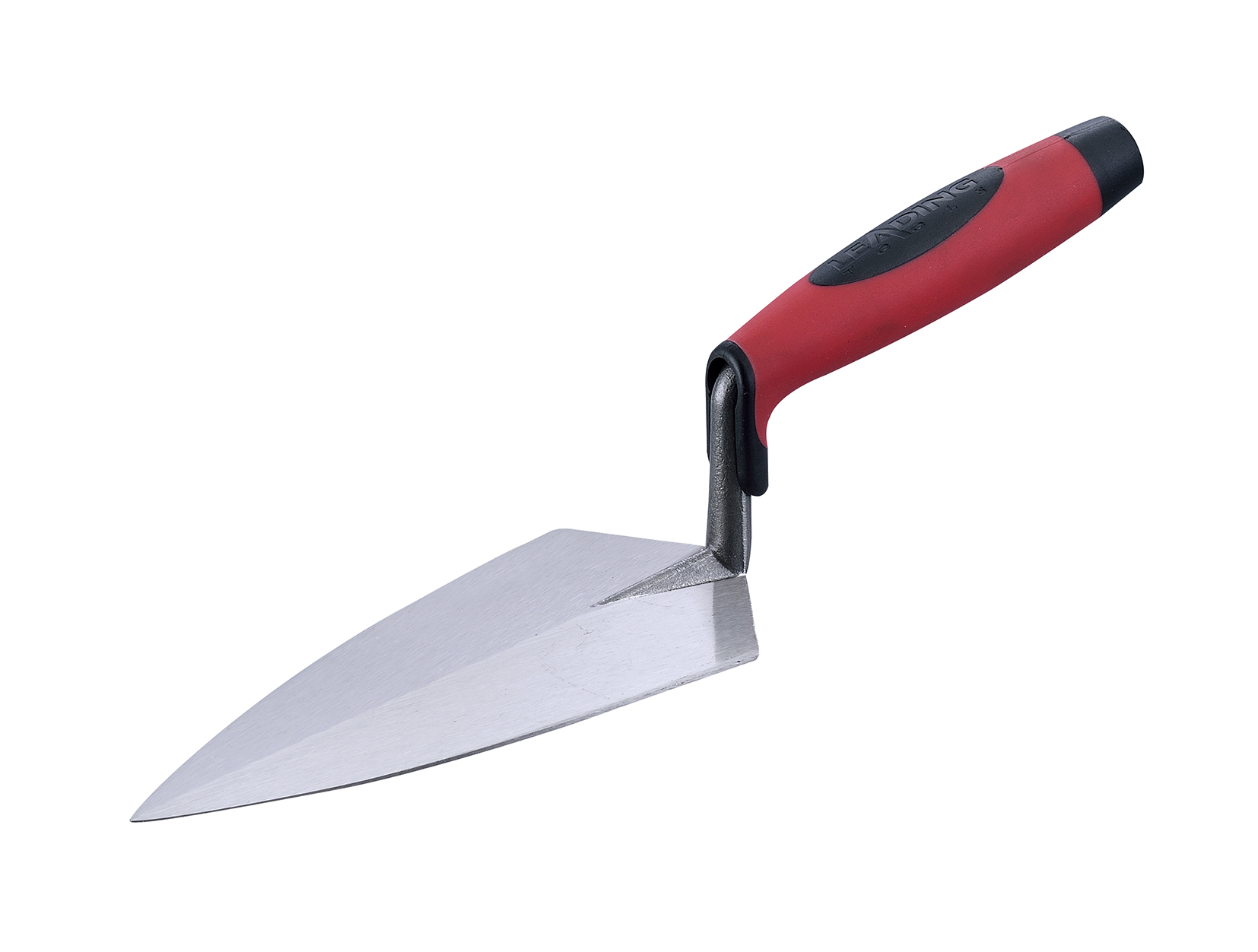
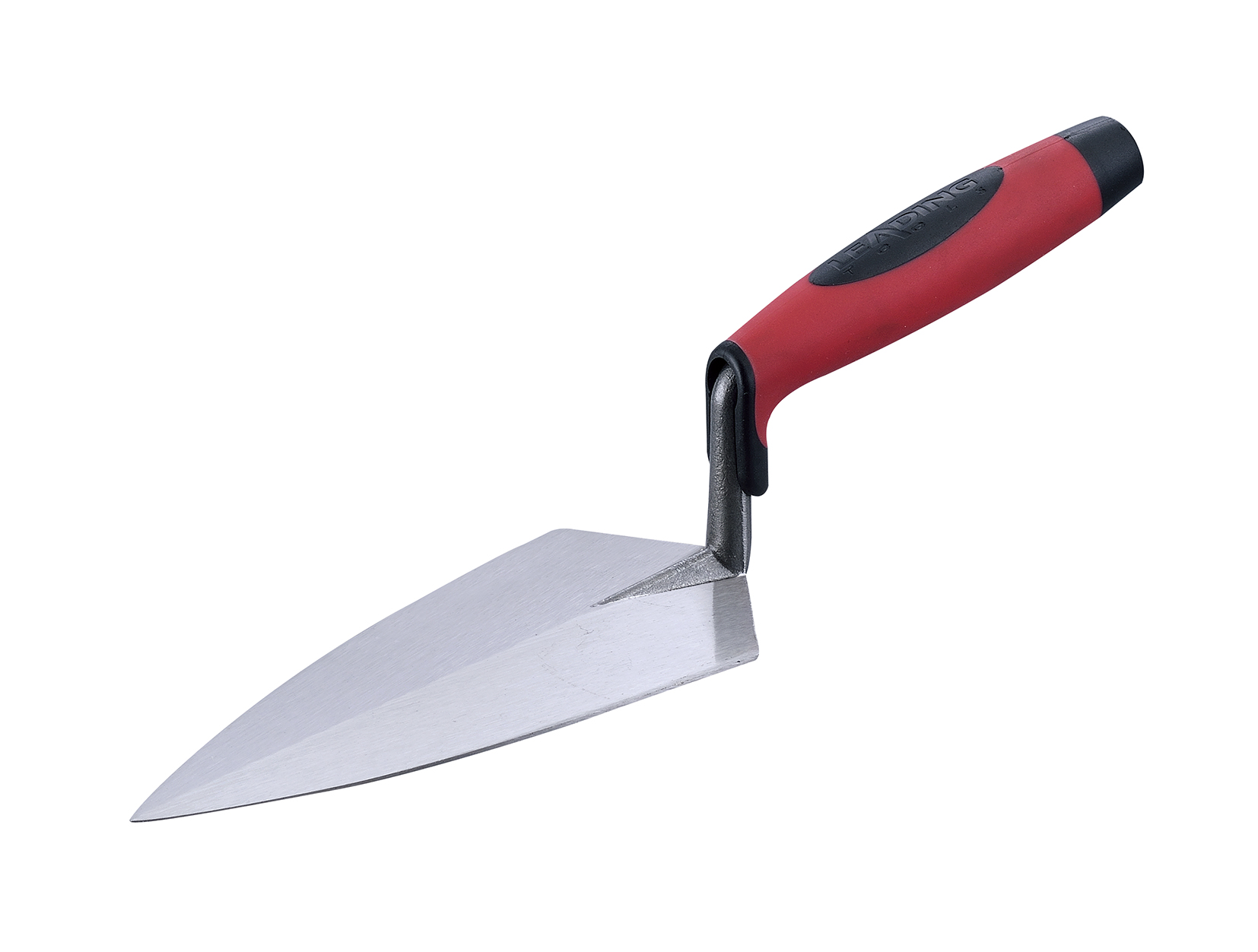
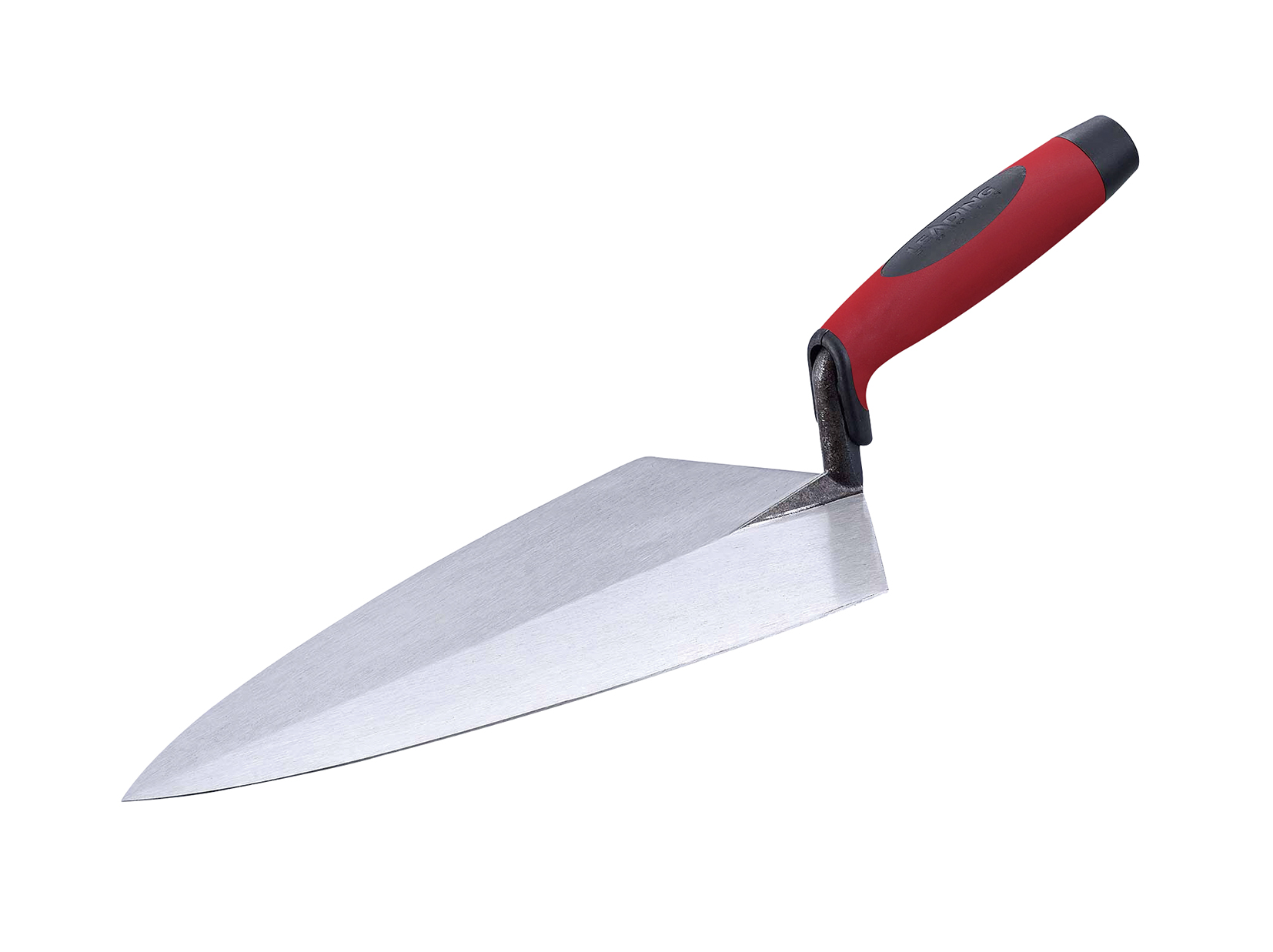
Philadelphia Pattern Brick Trowel — Forged
Product Description
Product name: Philadelphia Pattern Brick Trowel
Construction line: Forged in One-piece High Carbon Steel
Full name: Philadelphia Pattern Forged Brick Trowel
Art. Nr (nine sizes): 009721 (9"), 000721 (10"), 001721 (11"), 002721 (12"), 003721 (4-1/2"), 004721 (5"), 005721 (5-1/2"), 006721 (6"), 007721 (7").
The nine art numbers are one product family in two size groups: 9" to 12" and 4-1/2" to 7". They are listed as two size groups, but both belong to the same line, Philadelphia Pattern Brick Trowel / Forged in One-piece High Carbon Steel.
Other handles can be fitted on request; contact Leading Tools sales.
Alternative construction: the identical Philadelphia blade geometry is also offered as a CO2 Welding Carbon Steel line in the same nine sizes: 109721 (9"), 100721 (10"), 101721 (11"), 102721 (12"), 103721 (4-1/2"), 104721 (5"), 105721 (5-1/2"), 106721 (6"), 107721 (7"). The Specifications Overview below compares the two constructions.
Shank. The shank lifts the handle clear of the mortar bed and sets the working height of the hand above the blade.
One-piece construction. This trowel is forged from a single piece of high-carbon steel, with no joint between blade and shank. The CO2 welded line in the same geometry (see Specifications Overview below) is made with blade and shank fabricated separately and joined by weld.
Mortar volume per pass. The pattern exists because concrete block (CMU) and larger stone units need more mortar per course than a standard clay brick, and the wide blade with the square heel is what delivers that volume in one pick-up.
More than a laying tool. The same blade is used to strike off and level a bed, cut away mortar squeezed out of a joint, tidy joint lines, and finish stonework. A single Philadelphia trowel therefore covers most of the mortar handling on a wall.
Primary use. Spreading full mortar beds for standard brick courses; loading and placing mortar; bedding block and larger stone units.
| Situation | Use the Philadelphia Forged? | Why |
|---|---|---|
| Laying concrete block (CMU) | Yes, 11"–12" | The pattern is designed for the higher mortar volume block courses need; 11" is a common size for block |
| Bedding larger stone units | Yes | Same reason: more mortar per course than clay brick |
| Laying standard clay brick | Yes, but compare | Works well at 9"–10"; the Narrow London pattern is the one purpose-built for clay brick |
| Cutting brick with the trowel edge | Yes, and this is where construction matters | Lateral loading is exactly where welded trowels fail at the neck; specify the forged line. The blade may lightly tap a unit into position; do not pry with the blade or use it as a lever |
| Striking off and levelling a bed | Yes | Standard use of the same blade |
| Cleaning squeezed-out mortar from a joint | Yes | Cut it away with an upward slicing motion rather than wiping |
| Finishing stonework | Yes | Stonemasons use the same blade for finishing |
| Tight openings, patching, apprentice practice | Yes, 4-1/2" to 7" | The short sizes in the same pattern |
| Pointing and jointing a finished joint | No | Pressing and compacting mortar into the joint is done with a Tuck Pointing Trowel or a Brick Jointer |
| Step | Action | Detail |
|---|---|---|
| 1 | Grip | Thumb forward, resting on top of the handle near the ferrule; the other four fingers wrap the handle loosely. Do not death-grip it: the blade should be free to rotate naturally, which is what keeps the hand from tiring |
| 2 | Load | Dip the blade into the mortar and pick up on the square heel. The wide heel and deep cross-section take enough mortar for a full bed in one pass |
| 3 | Lay the bed | Hold the blade at roughly 30° and lay a mortar bed about 1 inch thick and about three bricks long |
| 4 | Furrow | Drop the point of the trowel to about 45° and run a furrow down the centre of the bed so the unit beds down evenly when pressed in |
| 5 | Butter the head joint | Pick up a daub of mortar on the blade and butter it onto the end face of the new brick for the head joint; the pointed toe helps scoop and control the lump |
| 6 | Place the unit | Press the unit down positively rather than sliding it, push it up against the brick already laid, and tap it to line and level (on 9" and longer sizes, tap with the hard end-cap at the butt of the handle, not with the blade). Correctly mixed mortar does not need force: pressing hard is one of the two common errors |
| 7 | Strike off | Cut away the squeezed-out mortar with an upward slicing motion of the blade rather than wiping it flat, which is what smears the face |
| 8 | Repeat and clean | Keep the blade clean as you work; mortar left to set on the face is what damages the blade over a shift |
Correcting unit position (handle end-cap). On 9" and longer sizes: after the unit is placed, tap lightly with the hard end-cap at the butt of the handle to correct position and level; do not use the blade for tapping. The forged blade edge remains suitable for cutting brick.
On 4-1/2"–7" sizes (no end-cap): only occasional light taps with the blade are acceptable; do not use the soft-grip butt as a regular striking face. The forged blade edge remains suitable for cutting brick.
The two errors that cost the most. Pressing the brick down hard instead of tapping it, correctly mixed mortar does not need the force, and gripping the handle too tightly, which is the direct cause of wrist and forearm fatigue over a shift.
The Philadelphia Forged is the primary mortar-handling tool in a mason's kit. It is the first tool to contact mortar and performs the highest-volume work of the day.
Why the wide heel matters. The heel is the platform the blade sits on when the mason scoops. A wider, squarer heel gives a more stable landing surface and reduces the tendency of the trowel to tip or roll when collecting mortar. The square heel is the most visible difference from the London pattern, and it is the reason the pattern carries more mortar per load.
Forward balance and wrist fatigue. Grip tension, not blade balance, is the main fatigue factor.
Cutting away squeezed-out mortar. The practical point: do not wipe mortar flat against the face, cut it away with an upward slicing motion.
What one-piece construction means. Blade, shank and handle tang are the same piece of steel, with no joint between them.
In commercial construction: large residential developments, schools, offices, the trowel is in the hand all day.
For this environment, specify from the top of the size range. The 9"–11" sizes (009721, 000721, 001721) carry enough mortar for a full standard course in one load, and where the work is block rather than brick 11" is a common choice.
Restoration work has a specific profile: bricks are often softer and more irregular than modern production units, joints may be deeper or non-standard, and the same tool stays in use for weeks on one project. The tool is in continuous use, and the forged blade has no joint between blade and shank.
The Philadelphia pattern's wide heel and high mortar capacity also suit the larger mortar volumes that deeper, lime-rich historic bed joints take.
Soft handmade brick: for very soft handmade brick, the London pattern is the better choice: narrower blade and rounded heel. Leading Tools offers both Narrow London and Wide London. Specify Philadelphia where mortar volume per pass is the priority; specify London where control on soft, irregular brick is the priority.
This is the application the pattern was designed around. Concrete block and larger stone units need more mortar per course than a standard clay brick, and the wide blade with the square heel is the geometry that delivers it.
Specify 11"–12" (001721, 002721). If a crew is buying one size for mixed brick-and-block work, 11" is the sensible compromise.
The 9"–10" sizes remain workable on CMU but suit clay brick better, where the course height matches the blade's mortar capacity more closely.
In cold weather (below 4°C / 40°F) mortar sets more slowly and must be protected from freezing. In hot weather (above 38°C / 100°F) or in wind, mortar stiffens from evaporation as well as hydration; the wide heel and deep blade let the mason collect and place larger lumps quickly, which helps maintain pace as workability drops.
In adverse weather the maintenance consequence matters as much as the technique: mortar that flash-sets on the blade is what damages the face, so clean the blade more often when the batch is stiffening fast.
Q: What is the difference between the Philadelphia and the London pattern, and which do I need?
A: The Philadelphia has a wider blade and a square heel; the London has a narrower blade and a rounded heel. Choose Philadelphia for concrete block and larger stone units, where each course takes more mortar, and London for standard clay brick. Leading Tools offers both Narrow London and Wide London.
Q: What size should I order?
A: The two most commonly used sizes are 10" and 11". For mixed brick-and-block work, 11" (001721) is a sensible single choice.
Q: Should I choose the forged or the CO2 welded version of the same blade?
A: Both lines share the same shape in the same nine sizes. A forged trowel is made from one piece of steel, with no weld between blade and shank. In the CO2 welded line (109721, 100721–107721), blade and shank are fabricated separately and joined by weld, so the weld should be included in the routine tool check.
Q: Mortar sticks to the blade and will not release cleanly. What is wrong?
A: Usually set residue on the blade face. Clean thoroughly after every use and soak off anything that has hardened, using a nylon brush rather than a wire brush. Also check the mortar itself, because mortar that is too wet or too old behaves the same way.
Q: I get wrist and forearm fatigue by the end of the day. Is it the trowel?
A: Check grip tension first: a tight "death grip" is the direct cause, so hold the handle loosely with the thumb forward on top, near the ferrule, so the blade can rotate naturally.
Then check the size, since a smaller blade is easier on the wrist. Then check the mortar: if you are forcing units down instead of tapping them, the mix is the problem, not the tool.
The Philadelphia Forged line is produced from a single piece of high carbon steel, shaped so that blade, shank and handle tang are one integrated part.
One-piece forging has one structural effect that matters to a buyer:
| Attribute | Specification |
|---|---|
| Product name | Philadelphia Pattern Brick Trowel |
| Construction | Forged in One-piece High Carbon Steel |
| Material | High carbon steel, polished blade |
| Blade shape | Philadelphia pattern: wide square heel, deep cross-section, pointed toe |
| Blade length range | 4-1/2" – 12" (114–305 mm), nine sizes |
| Shank | Curved carbon steel shank, integral with blade and tang |
| Handle | Soft grip, BF21 |
| Alternative construction, same blade | CO2 Welding Carbon Steel, 109721, 100721–107721, same nine sizes |
Both lines share the same Philadelphia blade geometry and the same nine sizes. The difference is entirely in how the blade and shank are joined.
| Attribute | Forged (One-piece) | CO2 Welded |
|---|---|---|
| Construction line | Forged in One-piece High Carbon Steel | CO2 Welding Carbon Steel |
| Art. Nr, 9"–12" | 009721 / 000721 / 001721 / 002721 | 109721 / 100721 / 101721 / 102721 |
| Art. Nr, 4-1/2"–7" | 003721 / 004721 / 005721 / 006721 / 007721 | 103721 / 104721 / 105721 / 106721 / 107721 |
| Construction | Single steel piece, blade and shank formed together | Blade and shank fabricated separately, joined by weld |
| Joint between blade and shank | None; blade and shank are one piece | Blade and shank joined by weld |
| Note | Blade, shank and tang are one forged piece; there is no joint to inspect | Blade and shank are welded; include the weld in the routine tool check |
Buyers usually choose pattern before size, and the Leading Tools range carries all three patterns.
| Pattern | Forged Art. Nr | CO2 welded Art. Nr | Blade character | Work it is designed for |
|---|---|---|---|---|
| Philadelphia Pattern Brick Trowel | 009721 / 000721 / 001721 / 002721 (9"–12"), 003721–007721 (4-1/2"–7") | 109721 / 100721 / 101721 / 102721 (9"–12"), 103721–107721 (4-1/2"–7") | Wide blade, square heel, high mortar volume per load | Concrete block (CMU) and larger stone units |
| Narrow London Pattern Brick Trowel | 019721 / 010721 / 011721 / 012721 (9"–12") | 119721 / 110721 / 111721 / 112721 | Narrower blade, rounded heel | Standard clay brick |
| Wide London Pattern Brick Trowel | 029721 / 020721 / 021721 / 022721 (9"–12") | 129721 / 120721 / 121721 / 122721 | Widened London blade, carries more mortar than the narrow version | Work needing more mortar than clay brick but a London feel |
The one-line rule: choose the pattern by the material, choose the size by the operator and the work rate: block and large stone go Philadelphia, standard clay brick goes Narrow London, and Wide London sits between them.
| ART.NR | Blade Size | Metric (1" = 25.4 mm) | Primary Application |
|---|---|---|---|
| 003721 | 4-1/2" | 114 mm | Tight spots, apprentice training, detail repair |
| 004721 | 5" | 127 mm | Light brick and patch work |
| 005721 | 5-1/2" | 140 mm | Light brick, patch work, small-scale projects |
| 006721 | 6" | 152 mm | Repair and renovation trades |
| 007721 | 7" | 178 mm | Bridge between the short sizes and full-size laying |
| 009721 | 9" | 229 mm | Full-bed laying, the smallest of the professional sizes |
| 000721 | 10" | 254 mm | One of the two most commonly used sizes; a common choice for brick |
| 001721 | 11" | 279 mm | The other most common size; a common choice for block |
| 002721 | 12" | 305 mm | Largest size in the line; highest mortar volume per pass |
Which size. The two sizes most commonly used in bricklaying are 10" and 11". As general experience, a smaller blade is easier on the wrist and a larger blade carries more mortar per pass; 10" is a common choice for brick and 11" for block. Treat this as a starting point rather than a specification.
Beginners. A smaller size reduces load while learning; an 11" standard trowel is also a versatile single purchase that is still not too heavy. Either is a reasonable choice.
By trade level:
By substrate:
By repair versus new work. The 4-1/2" to 7" group (003721–007721) is not a smaller version of the same job; it is a different job. These sizes are for pointing-adjacent repair, patching, working inside a confined opening, and training.
All nine Philadelphia Forged art numbers are supplied with the soft grip handle BF21. Other handles can be fitted on request; contact Leading Tools sales.
| Handle Type | Characteristics | Best For |
|---|---|---|
| Soft grip (BF21 as standard here) | Soft grip | All-day use; the type Leading Tools fits as standard on this product |
| Wood, beech (Wb021 / Wb022 / Wb023) | Traditional wood handle; needs periodic oiling | Traditional masons |
All nine art numbers, complete. Material and construction are identical across the nine; only the size code changes.
| ART.NR | Size | Metric | Material & Construction | Blade Finish | Handle |
|---|---|---|---|---|---|
| 003721 | 4-1/2" | 114 mm | Forged in One-piece High Carbon Steel | Carbon steel polish | Soft grip, BF21 |
| 004721 | 5" | 127 mm | Forged in One-piece High Carbon Steel | Carbon steel polish | Soft grip, BF21 |
| 005721 | 5-1/2" | 140 mm | Forged in One-piece High Carbon Steel | Carbon steel polish | Soft grip, BF21 |
| 006721 | 6" | 152 mm | Forged in One-piece High Carbon Steel | Carbon steel polish | Soft grip, BF21 |
| 007721 | 7" | 178 mm | Forged in One-piece High Carbon Steel | Carbon steel polish | Soft grip, BF21 |
| 009721 | 9" | 229 mm | Forged in One-piece High Carbon Steel | Carbon steel polish | Soft grip, BF21 |
| 000721 | 10" | 254 mm | Forged in One-piece High Carbon Steel | Carbon steel polish | Soft grip, BF21 |
| 001721 | 11" | 279 mm | Forged in One-piece High Carbon Steel | Carbon steel polish | Soft grip, BF21 |
| 002721 | 12" | 305 mm | Forged in One-piece High Carbon Steel | Carbon steel polish | Soft grip, BF21 |
Cross-reference: same blade, CO2 welded construction: 103721 (4-1/2"), 104721 (5"), 105721 (5-1/2"), 106721 (6"), 107721 (7"), 109721 (9"), 100721 (10"), 101721 (11"), 102721 (12"). Nine sizes, matching the forged line one for one.
Immediate cleaning is the single most important maintenance action, and it is the one lever that most affects how long the tool lasts. Mortar left to set creates an uneven blade face that accelerates wear and spoils mortar release.
This is a carbon steel blade and it will rust if it is left wet. Daily oiling keeps rust off; visible rust sets in when the tool sits in a damp place for more than a week without oil.
| Issue | Symptom | Action |
|---|---|---|
| Surface rust | Light orange-brown spots | Remove with fine emery cloth worked along the blade; rinse, dry and oil immediately |
| Rolled or damaged edge | Blade tip or edge not straight | Reshape with a fine file if minor; replace if significant |
| Crack at the heel | Visible crack line near the shank-to-blade junction | Replace immediately; a crack there means the tool is finished |
| Loose handle | Handle wobbles or turns on the shank | Re-fix or replace; a loose handle is an injury risk |
| Handle wear or splitting | Soft grip torn or delaminating, wood splintering | Replace the handle; do not work with a damaged handle |
| Uneven blade face | Set mortar in an uneven deposit | Soak and clear with a plastic scraper or nylon brush, then rinse and oil |
Soft grip (BF21, as supplied). Wipe clean with a damp cloth; do not soak. Inspect periodically for tears or damage to the grip.
Wood handles (Wb021 / Wb022 / Wb023). Keep dry between uses. Apply linseed or tung oil annually to prevent cracking and splintering. If the handle gets wet, let it dry naturally; do not apply direct heat.
Over time the blade edge, particularly toward the tip, dulls from contact with brick faces and concrete. A dull edge takes more force to cut and spread mortar, which increases fatigue and reduces control.

In compliance with EU personal data protection laws, we are committed to protecting and providing you with control over your personal data. By clicking "Accept All", you allow us to place cookies to enhance your experience on this site, help us analyze site performance and usage, and enable us to deliver relevant marketing content. You can manage your cookie settings below. By clicking "Agree" you agree to the current settings. For more information, please visit the Privacy Statement.
This website uses cookies
In compliance with EU personal data protection laws, we are committed to protecting your personal data and providing you with control over it. By clicking "Agree", you allow us to place cookies to improve your experience on this site, help us analyze site performance and usage, and allow us to deliver relevant marketing content.
By clicking "Only necessary" you allow us to place only necessary cookies. The website cannot function without these cookies and you cannot switch them off on your system. These cookies are typically set only in response to an action you perform (i.e. a service request), such as setting privacy preferences, logging in, or filling in a form. You can set your browser to block or prompt you for these cookies, but this may prevent some site features from working.