
Copyright 2026 © Leading Tools Industrial Co., Ltd.
All Rights Reserved. Website Design by Awakening Design
CATALOG TYPE
Product Categories
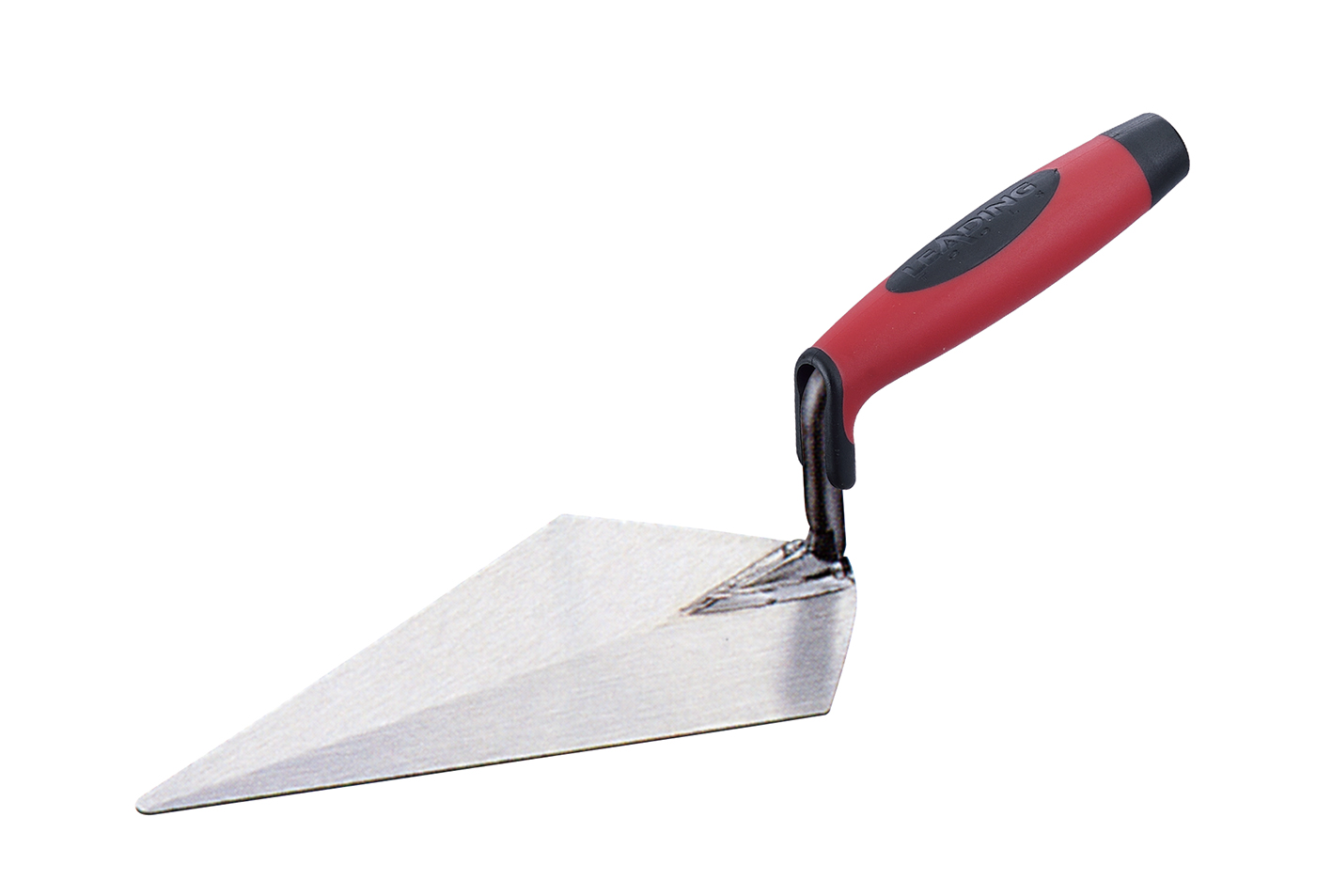
Pointing Trowel — CO2 Welded Carbon Steel, 140 / 160 mm
Product Description
Product name: Pointing Trowel
Construction line: CO2 Welding Carbon Steel
Art. Nr: 292621 (140 mm), 293621 (160 mm)
This is the metric, Europe-pattern pointing trowel. It is sized and ordered in millimeters, it is built in two sizes only, and its blade and shank are joined by CO2 welding. Leading Tools also builds an imperial pointing trowel line, in inches; see the Selection Guide, where the two lines are compared side by side. The two lines share a name in English, so a buyer should order by the art number rather than by the words "pointing trowel."
The same blade pattern is also built in stainless steel as 292821 (140 mm) and 293821 (160 mm). Because two different Leading Tools lines are both called "Pointing Trowel" in English, order this one as Pointing Trowel CO2 Carbon Steel 292621 / 293621 (140–160 mm), by art number.
It does the jobs that a joint tool cannot do on its own. A pointing trowel is a small-bladed trowel for picking up small amounts of mortar, patching and small rebuilds, repairs, detail rendering/plastering, and carrying mortar to the edge of the joint.
Because the blade has real surface area behind the point, one tool picks mortar off the hawk, carries it to the wall, places it, and trims off the excess.
A Tuck Pointing Trowel, Leading Tools builds one, the Tuck Pointing Trowel (Drop Forged), is a narrow strip sized to joint width, and is a packing tool rather than a carrying tool. Pressing mortar into the joint and compacting it is done with the Tuck Pointing Trowel or a Brick Jointer.
Metric sizing for metric specifications. 140 mm and 160 mm are ordered as millimeters, not as a converted inch size. That matters for distributors whose specifications and customs paperwork are metric throughout. The equivalent imperial line steps 4", 5", 6", 7": 102, 127, 152, 178 mm, so neither 140 nor 160 mm has an exact imperial twin, and the two lines are not substitutable SKUs.
Carbon steel needs care. Carbon steel blades cost less, but they must be wiped dry and thinly oiled after use, or they will rust. For a crew that cleans its tools daily, this is a workable choice.
Welded construction, the same blade geometry. Blade geometry, toe shape, heel width, blade area, is what determines how the tool handles mortar; it is unchanged by how the blade is attached to the shank. Do not use it for heavy or leveraged work.
Soft grip on both sizes. Both sizes carry the BF21 soft grip handle, so a buyer does not have to accept a different handle to get a different blade length.
Primary uses. Picking up small amounts of mortar, patching and small rebuilds, repairs, detail rendering/plastering, and carrying mortar to the edge of the joint, including internal corners and reveals. Pressing mortar into the joint and compacting it is done with a Tuck Pointing Trowel or a Brick Jointer.
The Pointing Trowel CO2 is a tool for handling small, controlled quantities of mortar accurately, in places where a laying trowel is too large to see past or to fit.
| Task | Use this tool? | Notes |
|---|---|---|
| Repairing and repointing weathered brickwork | Yes, primary use | Carries small amounts of mortar to the joint; packing it in is done with a Tuck Pointing Trowel or Brick Jointer |
| Detail work on newly laid brickwork | Yes, primary use | Carries mortar to joints and corners the laying trowel could not reach cleanly; striking the joint is done with a Brick Jointer |
| Placing mortar in internal corners, edges and narrow spots | Yes | The pointed blade is made for exactly this |
| Small patch and repair work | Yes | Where a full brick trowel is too large for the area |
| Touch-up around window and door reveals | Yes | An edge-and-corner case of the above |
| Stone veneer and decorative brick detail touch-up | Yes | Same motion, smaller units |
| Packing mortar deep into a long run of width-specific joints | No | Use the Tuck Pointing Trowel |
| Bedding and spreading mortar for laying courses | No | Use a brick trowel |
| Cutting or trimming bricks with the blade edge | No | Not designed for cutting; use a brick hammer or chisel |
| Mixing, scraping adhesive, prying | No | Not a scraper or a lever |
| Step | Action | Why |
|---|---|---|
| 1 | Hold the trowel lightly between thumb and the first two fingers, the grip is often described as holding a razor, palm upward, thumb resting against the handle, wrist tucked slightly down and in | A light grip lets the blade follow the joint instead of fighting it; the thumb is what steers the point |
| 2 | Cut a ribbon of mortar off the hawk with the edge of the blade | Loading from the edge gives a controlled, repeatable quantity rather than a shovelled lump |
| 3 | Bring the loaded blade up to the joint and place the mortar at the edge of the joint, working from the brick face | Placing from the face keeps the mortar in reach and off the brick face |
| 4 | Hold the blade at roughly 30° to the joint face and place the mortar with even pressure; fill the vertical (head) joints first, then the horizontal (bed) joints | Consistent angle gives consistent placement; pressing the mortar home to the back of the joint is done with a Tuck Pointing Trowel or a Brick Jointer |
| 5 | Make sure the joint is packed to full depth, with a Tuck Pointing Trowel or Brick Jointer, with no trapped air pockets before moving on | A partly filled joint fails first at the face and lets water in |
| 6 | Strike the joint to profile with a Brick Jointer: draw the jointer along the joint to press a concave or V profile | The strike is what compresses the mortar face and sheds water |
| 7 | Work in short repeated passes with small mortar loads rather than one heavy load | Small loads are easier to place accurately and smear the surrounding face less |
| 8 | Clean the blade before the mortar sets | See Care & Maintenance: this is a carbon steel tool |
Rake the failed mortar out to a sound depth first, damp the joint, then work with this trowel and a hawk. The point places mortar at the head joints and the side edge levels excess mortar at the bed joints. Pressing the mortar home and tooling the finished profile is done with a Tuck Pointing Trowel or a Brick Jointer; this tool carries the mortar, that one packs to width.
After the laying trowel has bedded and buttered the units, this is the tool that goes over the wall to correct and tidy. It adds mortar at the spots the laying trowel could not reach cleanly, trims the joint edges, and adds mortar into corners and transitions; striking the joints to a consistent profile is done with a Brick Jointer.
Internal corners, window and door reveals, and the returns where a wall meets a frame are the classic case for a pointed trowel: narrow spots, edges and corners in masonry repair. Lead with the point, keep the blade shallow to the surface, and use the 140 mm size where the frame restricts the swing.
For a single spalled brick, a cracked joint or a small void, this tool covers most of the job: cut, carry, place and trim. This is the case where the tool's dual capability matters most, because bringing out a hawk, a brick trowel and a joint tool for one repair is not worth the trip.
On thin stone veneer, decorative brick bands and small exposed joints, the compact blade carries mortar to the joint without loading the surrounding faces, which is what keeps a decorative face clean while the work is going in.
Q: What is the difference between 292621 and 293621, and is 160 mm the same as a 6" pointing trowel?
A: The two differ in blade length only, 140 mm and 160 mm; the blade pattern, carbon steel blade, CO2 welded construction and soft-grip handle are identical. 160 mm is not a 6" trowel, because 6" is 152 mm and this metric line is only made in 140 mm and 160 mm. If the requirement is genuinely 6", that is the imperial line (026721 forged or 126721 CO2 welded), a different product, so always confirm the number and the unit.
Q: Is there a forged version?
A: Not in the metric line, which offers CO2 welded carbon steel (this product) and spot welded stainless (292821 / 293821); one-piece forging in a pointing trowel is only offered in the imperial line, 024721–027721. Do not use any pointing trowel to lever or cut.
Q: Should I buy carbon steel or the stainless version, and what if rust appears?
A: Carbon steel blades cost less, but they rust and must be dried and oiled after every use.
Stainless offers high corrosion resistance and low maintenance; chlorinated water, coastal air or prolonged soaking can still cause rust spots, so rinse with clean water and dry after use.
Choose by maintenance culture: daily tool cleaning means carbon steel, while shared tools, wet trades or coastal sites mean the stainless 292821 / 293821. Surface rust on the carbon blade is not a defect; clean it back, dry it completely, oil it and store it dry.
Q: What is it not suited for?
A: It cannot pack mortar into deep, narrow joints, and that does not mean you picked the wrong size: deep, width-specific joint packing is what the Tuck Pointing Trowel (Drop Forged, 070721–078721) is for, with a narrow strip blade selected to joint width. This trowel carries and places; the Tuck Pointing Trowel packs, and a Brick Jointer shapes the joint. For tile adhesive use a notched trowel.
Q: Mortar keeps smearing the brick face around the joint. How should I hold and use it?
A: Smearing is usually too much mortar on the blade, or entering the joint flat instead of point-first.
Reduce the load, lead with the point, and hold the blade near 30° to the joint face while placing the mortar; small repeated passes smear less than one heavy load. Hold the trowel lightly between thumb and the first two fingers, palm upward, because a tight fist grip fatigues the hand and costs accuracy at the point.
The blade is broad, short and triangular: a fine point at the toe, straight side edges opening out to a wide heel, and a straight or near-straight heel edge. This is a compact brick-trowel geometry, not a strip.
What that shape does in the hand:
This line is designated "CO2 Welding Carbon Steel". The blade and the shank are made as separate parts and joined at the heel by CO2 welding.
The duty cycle this tool is actually bought for is a light one. A pointing trowel is used for controlled placement and finishing, not for cutting brick, levering units, or tapping courses down to line; those loads belong to the laying trowel. Do not use it to lever, pry or cut.
| Property | Carbon steel (this line, 292621 / 293621) | Stainless steel (sister line, 292821 / 293821) |
|---|---|---|
| Corrosion | Rusts; must be cleaned, dried and oiled after every use | High corrosion resistance, low maintenance; chlorinated water, coastal air or prolonged soaking can still cause rust spots, so rinse with clean water and dry after use |
| Best fit | Crews that maintain tools daily | Wet trades, coastal sites, tool-share situations, lime and cement left on the blade overnight |
Because the two lines share the same blade pattern and sizes, the choice between them is a maintenance-culture decision, not a geometry decision.
Soft grip handle BF21. Other handles can be fitted on request; contact Leading Tools sales.
| Attribute | Specification |
|---|---|
| Product name | Pointing Trowel |
| Construction line | CO2 Welding Carbon Steel |
| Pattern family | Europe pattern |
| Blade material | Carbon steel |
| Blade pattern | Triangular pointing blade: pointed toe, straight sides, wide straight heel |
| Blade sizes | 140 mm, 160 mm |
| Joining method | Blade and shank welded (CO2 welding) |
| Handle | Soft grip, BF21 |
| Number of art numbers in this block | 2 |
| ART. NR | Blade size | Blade pattern | Blade material | Construction | Handle |
|---|---|---|---|---|---|
| 292621 | 140 mm (5.51") | Triangular pointing blade | Carbon steel | CO2 welding | Soft grip, BF21 |
| 293621 | 160 mm (6.30") | Triangular pointing blade | Carbon steel | CO2 welding | Soft grip, BF21 |
Leading Tools builds two pointing trowel families, and they are separated by measurement system, by art-number series and by the number of sizes offered.
| Metric line: this product | Imperial line | |
|---|---|---|
| Sizing | Millimeters: 140, 160 | Inches: 4", 5", 6", 7" |
| Number of sizes | 2 | 4 |
| Art numbers | 292621, 293621 | 024721, 025721, 026721, 027721 (forged); 124721, 125721, 126721, 127721 (CO2 welded) |
| Construction options | CO2 welded carbon steel; spot-welded stainless (292821 / 293821) | Forged one-piece high carbon steel or CO2 welded carbon steel |
| Blade geometry | Broad, short triangle; straight sides; wide straight heel | See the catalog |
How to use the table.
| Size | Choose it when |
|---|---|
| 140 mm: 292621 | Access is the constraint: reveals, internal corners, behind pipework and brackets, tight repair pockets. Precision matters more than reach. |
| 160 mm: 293621 | Reach and mortar per pass matter: longer joint runs, larger patch areas, working down a wall face rather than into a hole. The user wants one detail trowel to cover most jobs. |
The difference is 20 mm of blade: about 14% more length and correspondingly more usable blade area. In practice that translates into fewer trips to the hawk on a long joint run and slightly more blade to steer in a confined corner. Neither size changes the technique.
Leading Tools builds three closely related metric lines. All three are pointed masonry trowels, and they are genuinely different products.
| Product | Art. Nr / sizes | Construction and material | Choose it when |
|---|---|---|---|
| Pointed Triangle Trowel | 281821 (120 mm), 282821 (140 mm), 283821 (160 mm) | Spot welding; stainless steel | A 120 mm size is needed that this line does not offer |
| Pointing Trowel — CO2 Welding Carbon Steel (this product) | 292621 (140 mm), 293621 (160 mm) | CO2 welding; carbon steel | A carbon steel blade, in the two most-used sizes |
| Pointing Trowel — Spot Welding Stainless Steel | 292821 (140 mm), 293821 (160 mm) | Spot welding; stainless steel blade | Wet trades, coastal work, shared tools, tools that get put away dirty |
This line and the stainless line share the same blade pattern, so they are the same blade in two materials with two joining methods. The Pointed Triangle Trowel has a different blade shape.
Leading Tools builds a Tuck Pointing Trowel (Drop Forged) (070721–078721, nine sizes). It is a different tool for a different motion, and the two are not interchangeable.
| Pointing Trowel CO2 (this product) | Tuck Pointing Trowel | |
|---|---|---|
| Blade form | Short broad triangle with a point | Narrow, straight, elongated strip |
| Blade width | Fixed; wide enough to carry mortar | Selected to match the joint width; nine widths offered |
| Mortar capacity | Enough to pick up and carry a working load | Low by design: placement, not transport |
| Main motion | Cut, carry and place mortar with the point, trim with the edge | Insert into the joint and pack along the joint line |
| Best for | Picking up small amounts of mortar, patching and small rebuilds, repairs, detail work at corners and reveals, carrying mortar to the edge of the joint | Long runs of repointing to a defined joint width; packing mortar deep into an existing joint |
| Buy both when | The job is repointing at any scale: one carries the mortar, the other packs to width |
A brick trowel is a mortar transport and bedding tool; this is a finishing tool. Buyers do not choose between them, they carry both. The pointing trowel comes out when the brick trowel is too big to see past, too big to fit, or carries more mortar than the repair needs.
Bricklaying and pointing blades divide into London pattern (narrower blade, rounded heel, favored for fine joint work) and Philadelphia pattern (wider blade, squared heel, carries more mortar, favored for block and wider joints). The 292621 / 293621 blade is a European detail-trowel shape and does not map cleanly onto either label, but the vocabulary is worth knowing, because buyers will ask in those terms.
Complete art-number and size reference for this product.
| ART. NR | Blade size | Blade material | Construction | Handle |
|---|---|---|---|---|
| 292621 | 140 mm (5.51") | Carbon steel | CO2 welding | Soft grip, BF21 |
| 293621 | 160 mm (6.30") | Carbon steel | CO2 welding | Soft grip, BF21 |
Related art numbers (separate products):
| ART. NR | Size | Product |
|---|---|---|
| 292821, 293821 | 140 mm, 160 mm | Pointing Trowel — Spot Welding Stainless Steel (same blade pattern, stainless) |
| 281821, 282821, 283821 | 120 mm, 140 mm, 160 mm | Pointed Triangle Trowel — Spot Welded Stainless Steel |
| 024721, 025721, 026721, 027721 | 4", 5", 6", 7" | Pointing Trowel — Forged in One-piece High Carbon Steel (imperial line) |
| 124721, 125721, 126721, 127721 | 4", 5", 6", 7" | Pointing Trowel — CO2 Welding Carbon Steel (imperial line) |
| 070721 – 078721 | nine sizes | Tuck Pointing Trowel (Drop Forged) |
This is a carbon steel tool. Carbon steel blades must be cleaned, wiped dry and thinly oiled after every use, or they will rust.
The point and the side edges are the working surfaces, so their condition is the tool's accuracy. If the blade is bent, nicked or heavily rounded, placement accuracy drops, the point stops entering corners cleanly, and the placed mortar stops coming out even. A light burr can be dressed with a fine stone; a cracked or significantly deformed blade should be replaced rather than straightened.
Inspect the weld where the shank foot meets the blade at the same time as the blade. Any visible crack or lifting at that junction takes the tool out of service; it is not a field repair.
Keep hardened mortar off the soft grip and out of the gap between grip and shank. If movement develops between the handle and the shank, control and safety both drop and the tool should be inspected or replaced.

In compliance with EU personal data protection laws, we are committed to protecting and providing you with control over your personal data. By clicking "Accept All", you allow us to place cookies to enhance your experience on this site, help us analyze site performance and usage, and enable us to deliver relevant marketing content. You can manage your cookie settings below. By clicking "Agree" you agree to the current settings. For more information, please visit the Privacy Statement.
This website uses cookies
In compliance with EU personal data protection laws, we are committed to protecting your personal data and providing you with control over it. By clicking "Agree", you allow us to place cookies to improve your experience on this site, help us analyze site performance and usage, and allow us to deliver relevant marketing content.
By clicking "Only necessary" you allow us to place only necessary cookies. The website cannot function without these cookies and you cannot switch them off on your system. These cookies are typically set only in response to an action you perform (i.e. a service request), such as setting privacy preferences, logging in, or filling in a form. You can set your browser to block or prompt you for these cookies, but this may prevent some site features from working.