
Copyright 2026 © Leading Tools Industrial Co., Ltd.
All Rights Reserved. Website Design by Awakening Design
CATALOG TYPE
Product Categories
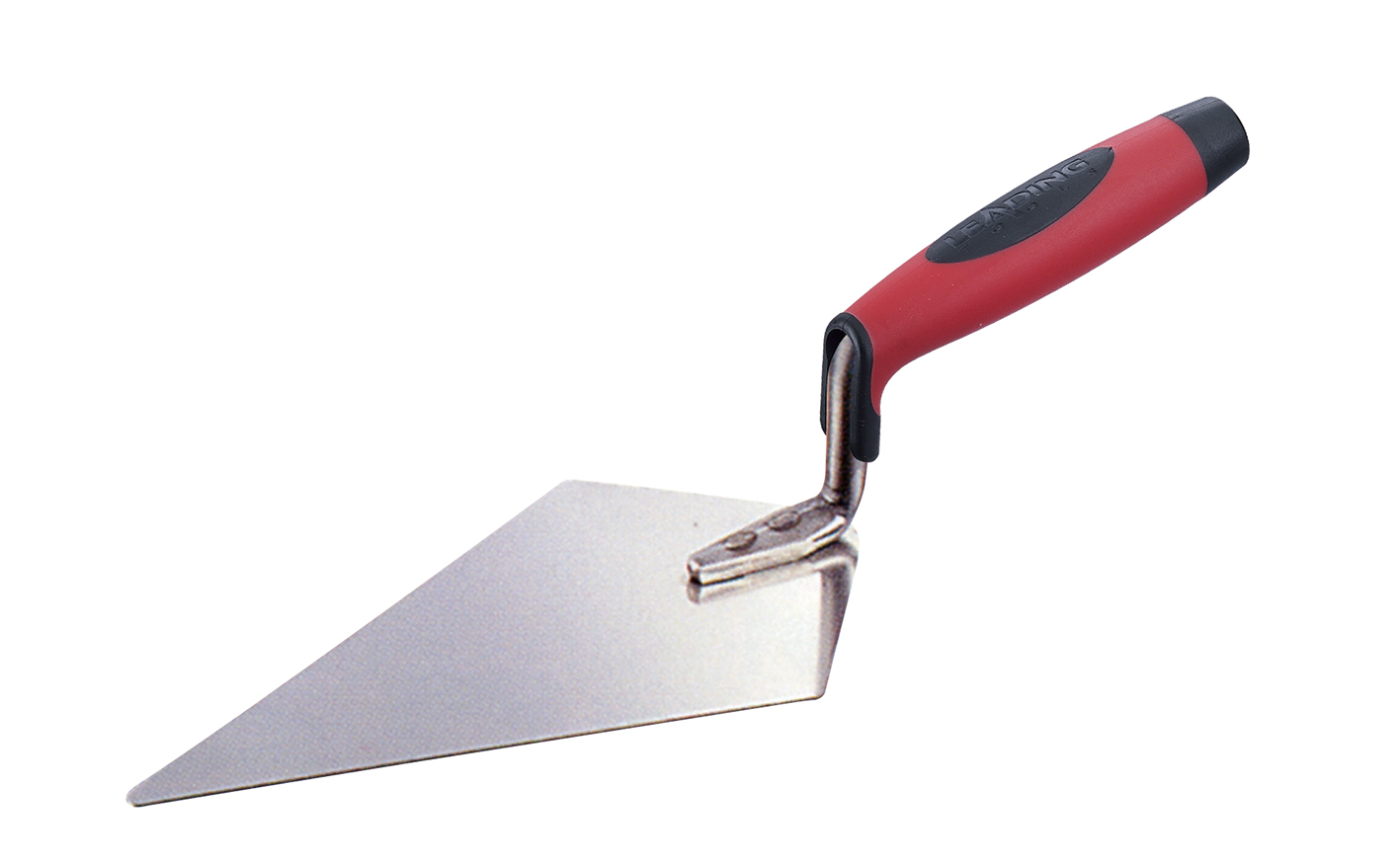
Pointing Trowel — Spot Welded Stainless Steel
Product Description
Pointing Trowel — Spot Welding Stainless Steel
ART. Nr: 292821 (140mm) · 293821 (160mm)
This is the stainless-steel member of Leading Tools' pointing trowel group. Two article numbers cover the whole range: 292821 at 140mm and 293821 at 160mm. Both are the same tool in two sizes: same blade pattern, same spot-welded stainless construction, same handle, so the only decision a buyer makes here is size.
Two neighboring products in the Leading Tools range are frequently confused with this one, and the article-number prefix is the fastest way to tell them apart. 292621 / 293621 is the CO2 Welding Carbon Steel pointing trowel in the identical 140mm and 160mm sizes: same blade pattern, carbon steel instead of stainless, CO2 welding instead of spot welding. 281821 / 282821 / 283821 is the Pointed Triangle Trowel (Spot Welded Stainless Steel) in 120mm, 140mm and 160mm. If a customer asks for "the stainless pointing trowel," 292821 or 293821 is the answer; anything else is a different tool.
A pointed triangular blade built for small, accurate mortar work: picking up small amounts of mortar, patching and small rebuilds, repairs, detail rendering/plastering, and carrying mortar to the edge of the joint. The blade is a short, broad triangle with straight sides that taper to a point at the toe, wide at the heel where it meets the shank.
That outline is what lets the blade place mortar accurately at the edge of a narrow joint without the sides of the blade riding up onto the brick faces either side of the joint. It is not a load-carrying blade and it is not a laying trowel: a pointing trowel is a detail tool that follows the mason. Pressing the mortar into the joint and compacting it is done with a Tuck Pointing Trowel or a Brick Jointer.
Stainless steel construction. This is the main reason to specify 292821 / 293821 over the carbon steel 292621 / 293621.
Stainless pointing and masonry trowels offer two things: high corrosion resistance with low maintenance, and a lower risk than carbon steel of transferring iron particles into fresh mortar or onto a pale brick face. Chlorinated water, coastal air or prolonged soaking can still cause rust spots, so rinse with clean water and dry after use.
Spot-welded fabricated construction. Blade and shank are produced as separate parts and joined by spot welding.
Spot welding or forging. Spot welding is a welded construction. A buyer who specifically needs one-piece forged construction can look at Leading Tools' forged pointing trowel range (024721–027721, imperial sizes). What 292821 / 293821 offers is stainless steel in a fabricated construction.
Two sizes. 292821 (140mm) is the shorter blade, easier to control in tight work; 293821 (160mm) is longer and carries more mortar per pick-up.
Soft-grip handle. BF21 soft grip. Other handles can be fitted on request; contact Leading Tools sales.
1. It lowers the risk of staining light-colored masonry. A rusting carbon steel blade sheds iron particles into the mortar it is carrying. On dark engineering brick nobody notices. On pale brick, calcium silicate (sand-lime) brick, cream limestone or architectural concrete, the result is a rust-brown discoloration in the joint face and dark streaks on the surrounding masonry, and once the mortar has cured, that discoloration is part of the joint and cannot be washed out.
2. It lightens the oiling routine in the tool's life cycle. A carbon steel pointing trowel that is put away wet will show rust the next morning, so carbon steel tools are cleaned, dried and wiped with oil after every use. Stainless masonry trowels have high corrosion resistance and low maintenance and are easy to clean, though chlorinated water, coastal air or prolonged soaking can still cause rust spots, so rinse with clean water and dry after use.
3. No oil film in contact with the mortar. Traditional repointing on period buildings uses lime-based mortars, which is slow, wet work in which a carbon steel blade spends hours in contact with the mortar and any iron mark shows against pale historic mortar. A stainless blade needs no protective oil film during the work and is less likely to leave marks.
4. The pointed blade gives directional control at the joint. The taper lets the toe be aimed at the joint at the shallow angle the work requires, reach corners and stopped ends, and be withdrawn without dragging mortar with it.
| Situation | Use this trowel? | Notes |
|---|---|---|
| Detail work on new brick or blockwork | Yes, primary use | Picking up small amounts of fresh mortar and carrying it to the edge of the joint; striking it flush is done with a Brick Jointer |
| Repointing an existing wall after raking out old mortar | Yes, primary use | Deliver mortar to the raked joint; compact it with a Tuck Pointing Trowel or Brick Jointer |
| Pointing pale brick, calcium silicate brick or cream stone | Yes, this is the case for stainless | Iron transfer is what ruins these faces |
| Lime mortar repointing on a period building | Yes | Soft lime-rich mixes and pale mortar; no oil film on the blade |
| Small stonework, confined spaces, awkward corners | Yes, prefer 292821 (140mm) | The shorter blade is easier to control |
| Localized patch and repair work in masonry | Yes | Small controlled mortar quantities; the point works into irregular gaps |
| Pressing mortar deep into a very narrow raked joint | Use a Tuck Pointing Trowel alongside | That is the Tuck Pointing Trowel's job; the two tools are used together |
| Laying brick, buttering, spreading a bed | No | Use a brick trowel; a pointing trowel is a finishing tool |
| Prying, chiseling, chopping brick, levering | No | Not a load-bearing or impact tool |
| Step | Action | Detail |
|---|---|---|
| 1 | Get the mortar consistency right first | Mortar consistency matters more than the trowel: the mix should hold its shape when cut, not slump |
| 2 | Cut a ribbon of mortar off the hawk | Take a controlled, narrow ribbon of mortar onto the blade; the narrow blade will not carry a brick-trowel load |
| 3 | Present the blade at roughly 30° | Approach the joint at about a 30-degree angle so the mortar is placed at the joint edge rather than smeared across the face; fill the vertical (head) joints first, then the horizontal (bed) joints |
| 4 | Pack to the back of the joint | Pressing the mortar fully to the back of the joint, so no voids are left behind the face (voids are where water gets in), is done with a Tuck Pointing Trowel or a Brick Jointer |
| 5 | Trim the surplus | Use the blade edge to cut off and level surplus mortar at the joint |
| 6 | Keep mortar off the brick face | Not smearing mortar onto the brick face is the technique that separates a clean job from one that needs cleaning down |
| 7 | Wait before striking the joint | Wait until the mortar has firmed before finishing with the jointer; press a thumb into it: when it takes a print without sticking to the thumb, it is ready |
| 8 | Clean the blade before the mortar sets | Wash off while wet, before mortar cures on the blade (see Care & Maintenance) |
Calcium silicate (sand-lime) brick and pale facing brick have smooth, dense, light-colored faces on which any iron mark is permanently visible, which is the whole reason a stainless blade is specified for this work. Work one joint at a time.
Keep the ribbon of mortar small so that nothing spills onto the face, present the blade at the shallow angle described above, and place the mortar at the edge of the joint; filling to the back of the joint is done with a Tuck Pointing Trowel or a Brick Jointer. Because the stainless blade has high corrosion resistance, there is less need to interrupt the run to wipe or re-oil, and less need to keep a separate "clean" trowel for the face work.
Historic joints are often narrower than modern brickwork and the mortar is deliberately soft. A stainless blade needs no protective oil film and is less likely to mark pale lime mortar. Specify 292821 (140mm), the shorter blade, for narrow or irregular joints.
For small stonework and tight spaces use the shorter 292821 (140mm). Work at the shallowest angle the space allows, keep the mortar load small, and use the point rather than the side of the blade to place the mortar.
For joints that need mortar compacted deep rather than merely placed, run the two tools as a pair: the pointing trowel delivers the mortar from the hawk into the joint mouth, and the Tuck Pointing Trowel, a narrower, thinner blade, presses it back and compacts it. Leading Tools' Tuck Pointing Trowel range is the matching item to use alongside 292821 / 293821.
Mortar consistency governs the result more than the tool does: the mix should hold its shape when cut and should not slump off the blade.
Q1. What is the difference between 292821 and 293821?
Size only, 140mm and 160mm, with the same pattern, the same stainless spot-welded construction and the same handle. 140mm is the shorter blade for tight, fine or irregular work; 160mm carries more mortar per pick-up.
Q2. Is stainless really rust-proof?
The stainless version offers high corrosion resistance with low maintenance, and a lower risk than carbon steel of transferring iron into fresh mortar or onto a pale brick face. Stainless is not rust-proof: carbon steel particles picked up from a wire brush or from lying against rusting tools, chlorinated water, coastal air or prolonged soaking can still cause rust spots, so keep a dedicated nylon brush, store the tool away from carbon steel tools, and rinse with clean water and dry after use.
Q3. Can I use this for laying brick, and do I need a Tuck Pointing Trowel as well?
No, it cannot lay brick: a pointing trowel is a detail tool for picking up small amounts of mortar, patching, repairs and carrying mortar to the edge of the joint, so for laying use a Philadelphia or London Pattern Brick Trowel. If the work involves pressing mortar deep into raked-out joints, you do need a Tuck Pointing Trowel, which has a much narrower and thinner blade; masons commonly use the two together, with the pointing trowel delivering the mortar and the Tuck Pointing Trowel packing it.
Q4. My mortar sticks to the blade and will not release. What is wrong?
Almost always the mix, not the tool. The mix should hold its shape when cut rather than slump, so check the mix first, then check that the blade is clean and free of detergent residue before starting a run. After pointing, wait until the mortar has firmed and test it with a thumb: when it takes a print without sticking to the thumb, it is ready for the jointer (the tool that shapes the finished joint).
Q5. What if the junction cracks?
If forged construction is specified, see the forged pointing trowel range (024721–027721, imperial sizes). If the blade–shank junction cracks, take the tool out of service and replace it, because re-welding does not restore the original joint.
| Attribute | Specification |
|---|---|
| Blade pattern | Triangular pointing pattern: straight sides tapering to a point at the toe, widest at the heel |
| Size | 140mm (292821), 160mm (293821) |
| Blade profile | Flat working face; low profile; no dish |
| Toe | Pointed toe: the defining geometric feature of the pattern |
| Material | Stainless steel |
| Attribute | Specification |
|---|---|
| Shank | Stainless steel, cranked so that the handle sits clear of the blade face |
| Shank joint | Spot welded to the blade at discrete points |
| Handle | Soft grip handle, BF21 |
Both constructions produce a fabricated trowel: blade and shank are separate parts joined after forming, as opposed to a forged trowel in which blade and shank are one piece of steel.
| Spot Welding (292821 / 293821) | CO2 Welding (292621 / 293621) | One-piece forged (024721–027721) | |
|---|---|---|---|
| Blade and shank | Separate parts, joined | Separate parts, joined | Single piece of steel |
| Blade material offered | Stainless steel | Carbon steel | Carbon steel |
| Corrosion behavior | High corrosion resistance, low maintenance | Requires oiling after every use | Requires oiling after every use |
| Iron transfer onto pale masonry | Lower risk than carbon steel | Possible once surface rust starts | Possible once surface rust starts |
| Property | Stainless steel (292821 / 293821) | Carbon steel (292621 / 293621) |
|---|---|---|
| Corrosion resistance in service | High corrosion resistance, low maintenance; chlorinated water, coastal air or prolonged soaking can still cause rust spots, so rinse with clean water and dry after use | Low: depends on an oil film maintained by the user |
| Iron contamination risk on pale masonry | Lower than carbon steel | Present once surface rust begins |
| Suitability for lime mortar and heritage work | Suitable: no oil film in contact with the mortar | Usable, but demands constant maintenance |
| Suitability for coastal and high-humidity work | Suitable | Poor without a rigorous drying and oiling routine |
| ART. Nr | Size | Who it is for |
|---|---|---|
| 292821 | 140mm | The shorter blade. Tight and irregular joints, small stonework, patch repairs and confined spaces, where control matters more than the amount of mortar carried |
| 293821 | 160mm | The longer blade; carries more mortar per pick-up: general pointing on standard brickwork |
160mm for general work. For general repointing and new-work joint finishing on standard brickwork, 293821 is a sensible default.
Move to 140mm when the work is tight, fine or irregular. The shorter blade is easier to control in confined spaces, small stonework and detail work. 292821 is the size for restoration, patching and detail work.
Buy both if the crew does mixed work. The two article numbers are the same tool in two sizes, and there is no learning curve moving between them.
These two get ordered interchangeably and they are not interchangeable. A Tuck Pointing Trowel has a much narrower and thinner blade, and its job is to press mortar deep into the joint and compact it. A pointing trowel carries and places the mortar.
In practice masons use them together: the pointing trowel delivers, the Tuck Pointing Trowel packs. If the customer's description is "pushing mortar deep into a raked-out joint," they want Leading Tools' separate Tuck Pointing Trowel range, not 292821 / 293821. If it is "picking up small amounts of mortar, patching, detail work and carrying mortar to the joint," this is the tool.
| If the work is… | Specify | Why |
|---|---|---|
| Pale brick, calcium silicate brick, cream stone, architectural concrete | 292821 / 293821 (stainless) | Lower risk of iron transfer and rust staining in the joint face |
| Lime mortar, heritage repointing, conservation work | 292821 / 293821 (stainless) | Soft lime-rich mortars, long wet contact, pale mortar that shows any mark |
| Coastal, marine or consistently humid climates | 292821 / 293821 (stainless) | The corrosion-resistant, low-maintenance option |
| Crew cannot be relied on to dry and oil tools daily | 292821 / 293821 (stainless) | Reduces the maintenance step that carbon steel depends on |
| Standard-color brick, dry or indoor work, tools maintained daily | 292621 / 293621 (carbon steel) | Same pattern and sizes |
| One-piece forged construction is specified | 024721–027721 (forged) | One-piece forged construction |
The handle on this article-number pair is a soft grip handle BF21. Other handles can be fitted on request; contact Leading Tools sales.
Complete article-number and specification reference.
| ART. Nr | Size | Material | Construction | Shank | Handle |
|---|---|---|---|---|---|
| 292821 | 140mm | Stainless steel | Spot welding | Stainless steel, cranked | Soft grip BF21 |
| 293821 | 160mm | Stainless steel | Spot welding | Stainless steel, cranked | Soft grip BF21 |
| Attribute | Specification |
|---|---|
| Product name | Pointing Trowel — Spot Welding Stainless Steel |
| ART. Nr | 292821 (140mm), 293821 (160mm) |
| Sizes | 140mm, 160mm |
| Blade pattern | Triangular pointing pattern with pointed toe |
| Material | Stainless steel |
| Construction | Fabricated; blade and shank joined by spot welding |
| Weld form | Spot welds at the blade–shank junction |
| Handle | Soft grip BF21 |
| Primary function | Small mortar work: picking up small amounts of mortar, patching, repairs, detail rendering/plastering, carrying mortar to the edge of the joint |
| Secondary uses | Small stonework, confined-space work, localized patch repair, transferring small quantities of mortar |
| Corrosion resistance | High corrosion resistance and low maintenance; chlorinated water, coastal air or prolonged soaking can still cause rust spots, so rinse with clean water and dry after use |
| Iron transfer onto masonry | Lower risk than carbon steel |
| Related article numbers | 292621 / 293621 (CO2 Welding Carbon Steel, same sizes); 281821 / 282821 / 283821 (Pointed Triangle Trowel, Spot Welded Stainless Steel); 024721–027721 (Pointing Trowel, forged) |
Wash the blade before the mortar cures. Cured mortar has to be chipped off, and chipping damages the face and the edges. Rinse and brush the blade at the end of each run rather than at the end of the day.
Use a nylon brush or a plastic scraper, not a steel wire brush or wire wheel. A steel wire brush scratches the stainless face and deposits carbon steel particles on it; those embedded iron particles rust and stain the blade even though the blade itself is stainless. Keep a dedicated nylon brush for stainless tools.
Store stainless tools apart from carbon steel tools. The same cross-contamination applies to a toolbox where a rusting carbon steel trowel lies against a stainless one.
Drying is good practice, and oiling is lighter than for carbon steel. This is the practical difference from the carbon steel version: stainless masonry trowels have high corrosion resistance and low maintenance, but chlorinated water, coastal air or prolonged soaking can still cause rust spots, so rinse with clean water and dry after use. A light wipe of oil before long storage is optional.
| Task | 292821 / 293821 (stainless) | 292621 / 293621 (carbon steel) |
|---|---|---|
| Wash off wet mortar after use | Yes | Yes |
| Dry immediately | Good practice | Necessary: standing water starts rust quickly |
| Oil after every use | Not required | Required in practice |
| Wire brush | Avoid: scratches the finish and embeds carbon steel particles | Avoid: scratches the finish |
| Storage alongside carbon steel tools | Avoid | Not an issue |
| Long-term corrosion risk | Low | High without a consistent oiling routine |
This is a fabricated tool, so the weld is the feature to watch. Look at the blade–shank junction whenever the tool is cleaned: check for a visible crack line at or beside a spot weld, for any movement or flex between blade and shank that was not there when new, and for corrosion around the weld area. If the junction shows a crack or has developed play, take the tool out of service. Re-welding a failed junction is not a field repair; replace the tool.
The point is the working part of this blade. A rounded, nicked or bent toe costs precision immediately: the blade stops placing mortar cleanly at the joint and starts dragging on the arrises. A light burr on the edges can be dressed with a fine stone; do not reshape the toe. A toe that is cracked or permanently bent is not worth dressing; replace the trowel.
Inspect the grip. Check for cuts or tears in the soft-grip material and for any loosening of the handle on the shank; a handle that has started to rotate will not be recoverable in the field. Wipe the grip clean with mild soap and water; do not use solvents.

In compliance with EU personal data protection laws, we are committed to protecting and providing you with control over your personal data. By clicking "Accept All", you allow us to place cookies to enhance your experience on this site, help us analyze site performance and usage, and enable us to deliver relevant marketing content. You can manage your cookie settings below. By clicking "Agree" you agree to the current settings. For more information, please visit the Privacy Statement.
This website uses cookies
In compliance with EU personal data protection laws, we are committed to protecting your personal data and providing you with control over it. By clicking "Agree", you allow us to place cookies to improve your experience on this site, help us analyze site performance and usage, and allow us to deliver relevant marketing content.
By clicking "Only necessary" you allow us to place only necessary cookies. The website cannot function without these cookies and you cannot switch them off on your system. These cookies are typically set only in response to an action you perform (i.e. a service request), such as setting privacy preferences, logging in, or filling in a form. You can set your browser to block or prompt you for these cookies, but this may prevent some site features from working.