
Copyright 2026 © Leading Tools Industrial Co., Ltd.
All Rights Reserved. Website Design by Awakening Design
CATALOG TYPE
Product Categories
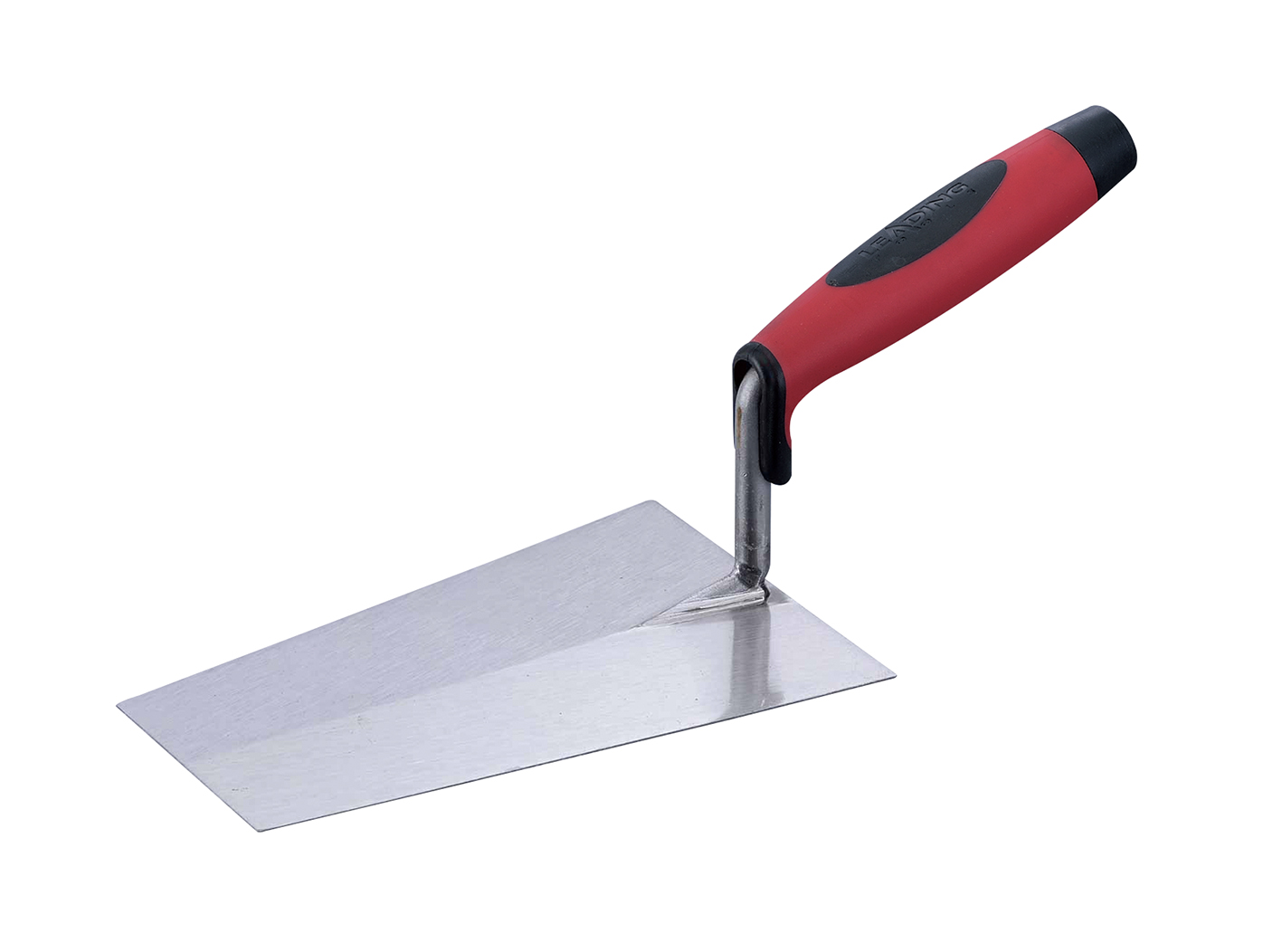
Bucket Trowel — CO2 Welded Carbon Steel
Product Description
Product name: Bucket Trowel
Construction line: CO2 Welding Carbon Steel
Art. Nr: seven sizes: 202621 (140mm), 203621 (160mm), 204621 (180mm), 205621 (200mm), 206621 (220mm), 207621 (240mm), 208621 (260mm).
This is one blade pattern in one construction, offered in seven blade sizes. The seven art numbers form a single line under the name "Bucket Trowel / CO2 Welding Carbon Steel", alongside a Forged in One-piece High Carbon Steel line and a Spot Welding Stainless Steel line. All three lines share the same blade pattern, so the Bucket Trowel is effectively a three-tier construction menu for one tool.
Note on sizes: nominal sizes are stated in mm only, with no inch equivalents. Every inch figure on this page is a conversion at 1" = 25.4mm and is shown in parentheses.
The blade is carbon steel with a working (non-polished) finish; the forged Bucket Trowel (204721F, 205721F) has a polished carbon steel blade, so a buyer choosing between the two lines is choosing finish as well as construction.
Alternative constructions in the range. The identical Bucket Trowel pattern is also offered as Forged in One-piece High Carbon Steel in two sizes: 204721F (180mm), 205721F (200mm), and as Spot Welding Stainless Steel in the same seven sizes: 202821 (140mm) through 208821 (260mm). The Selection Guide below compares the three, and that comparison is the main decision for this product.
The product line for this trowel is "CO2 Welding Carbon Steel". The blade and the shank are separate components joined by CO2 welding. That is a different route from the one-piece forging used for 204721F / 205721F in the same range.
The blade is trapezoidal: widest at the heel where the shank lands, tapering to a straight, blunt toe. That is the "cut-off blade" brick trowel geometry used for bulk scooping, and it is the defining difference from a Philadelphia or London brick trowel, which keeps a pointed or tapered toe for placing mortar into head joints.
Three consequences follow directly, and they are the reasons to buy this pattern rather than a brick trowel:
The carbon steel blade costs less, and it must be wiped dry and given a thin coat of tool oil after use, or it will rust; the routine in Care & Maintenance below is not optional. The stainless alternative in the Leading Tools range is the Spot Welding Stainless Steel line, 202821–208821.
This is a non-polished working finish, not a polished face.
Every art number in this line is fitted with the BF21 soft grip, the soft grip used across the Leading Tools brick trowel range.
Bulk transfer, not placement. The tool exists to move a large volume of mortar out of a bucket or mixing tub and onto a hawk, board or work face in as few movements as possible. A brick trowel does the precision half of the job; the bucket trowel does the volume half. They are complements, not substitutes, and most masons carry both.
A blade shaped around the bucket, not around the brick. A blunt toe lets the blade travel down the bucket wall and come up loaded, instead of catching on the radius the way a pointed trowel does.
Seven sizes: the widest choice in the range. 140mm to 260mm in 20mm steps means the blade can be matched to the container and the batch rather than the other way round. The forged line offers two sizes; the CO2 welded and stainless lines offer seven each. Choose the blade size by the container opening and the amount of material per pass.
Carbon steel blade. The carbon steel blade costs less, and it must be wiped dry and given a thin coat of tool oil after use, or it will rust. The stainless alternative is the Spot Welding Stainless Steel line (202821–208821).
Doubles as a mixing, patching and clean-down tool. Beyond scooping, the same blade folds and mixes small batches, loads patching compound into holes, and scrapes uncured material off surfaces and out of containers. In tiling it is also used to butter tile backs, load thinset, and lift a set tile to check back-coverage.
Non-masonry use is common. The pattern is also used for external wall insulation (EWI) and render work rather than bricklaying.
| Situation | Use the bucket trowel? | Why |
|---|---|---|
| Moving mortar from bucket or tub to hawk or board | Yes, primary use | Wide blade and blunt toe are built for exactly this |
| Buttering brick ends | Yes | Listed as a secondary use of the pattern |
| Smoothing and levelling a mortar bed | Yes | The straight toe edge strikes off |
| Loading and back-buttering thinset in tiling | Yes | ; |
| Scraping the bucket or tub wall clean | Yes | Recovers material and eases wash-down |
| Mixing a small batch, or loading patching compound | Yes | Secondary uses of the pattern |
| Placing mortar into head joints / precision bricklaying | No | Use a pointed brick trowel; the blunt toe cannot place accurately |
| Finishing coats, floating and skimming | No | Use a finishing or plastering trowel |
| Chopping, prying, or striking brick | No | Treat it as a scoop, not a hammer |
| Step | Action | Detail |
|---|---|---|
| 1 | Set the angle | Enter the mortar at roughly 30–45° against the bucket wall |
| 2 | Follow the wall | Let the blade edge track the curve of the bucket so it stays in contact rather than digging into the plastic |
| 3 | Lift in one motion | Draw up in a single smooth movement, bringing the blade level as it clears the mortar to reduce spillage |
| 4 | Keep it level in transit | Carry the loaded blade level; the load is on top of a flat blade, so tilt equals loss |
| 5 | Deposit | Tip the load onto the hawk, board or bed in one movement rather than pushing it off in stages |
| 6 | Strike off | Use the straight toe edge on the flat to level or strip excess |
| 7 | Scrape down | At the end of the batch, run the toe edge around the bucket wall to recover material |
The bucket is the tool's home ground. Match the blade length to the container opening: shorter blades for grout pails and small tubs, longer blades for larger buckets and tubs.
Some crews never scoop straight from the bucket and transfer to a hawk first instead. That is a legitimate alternative method, and where it is used the bucket trowel's role becomes bucket-to-hawk transfer rather than bucket-to-wall, which is still exactly what this tool does.
Tile setters use the pattern to lift thinset out of the bucket, load the notched trowel, back-butter tile, and, a specific and useful trick, lift a freshly set tile and inspect the back to check mortar transfer and coverage. In this application the blade doubles as a bucket scraper, which matters commercially because thinset left on the bucket wall is both wasted material and a harder wash-out.
For this work the smaller sizes carry the argument: 140mm (202621) and 160mm (203621) fit inside a grout pail and a thinset bucket.
For external wall insulation and render work, choose the size by the tub opening and the batch. The work is loading adhesive or base coat out of the tub and onto the wall or onto the applicator; the straight toe edge strips the tub down at the end of a mix.
For finishing coats: floating, skimming, closing the surface, a dedicated finishing or plastering trowel is required; this tool is a loading and transfer tool, not a finishing tool.
Beyond the primary cycle, the same blade folds and mixes small quantities of material back and forth, presses patching compound into holes, and scrapes uncured residue off surfaces and tools before it sets.
Q: What is a bucket trowel actually for, and do I still need a brick trowel?
A: It is a wide-bladed tool for scooping mortar out of a bucket, and it also butters brick and smooths mortar. The toe is blunt on purpose, so the blade can be pushed into a bucket and lifted out loaded without spearing or catching. It does not replace a brick trowel, because the pointed brick trowel places mortar into joints precisely, which a blunt toe cannot do; most masons carry both.
Q: Which size should I buy?
A: Match the blade to the container. Choose by the container opening and the amount of material per pass: 140–160 mm for grout pails, thinset buckets and confined work, 220–260 mm for wide tubs and large batches, and 180–200 mm as the general-purpose middle.
Q: Carbon steel or stainless, and how does it compare with the forged version?
A: The carbon steel blade costs less but must be cleaned, dried and oiled after use or it will rust; stainless steel has high corrosion resistance and a low maintenance burden, though chlorinated water, coastal air or prolonged soaking can still cause rust spots, so rinse with clean water and dry after use.
Leading Tools offers both in the same seven sizes: 202621–208621 in carbon steel and 202821–208821 in stainless. The forged line (204721F, 205721F) has no blade-to-shank joint, while this CO2 welded line has one; treat the choice as construction and size availability, not as good versus bad.
Q: How do I keep it from rusting, and what if the blade moves at the shank?
A: Rust almost always comes from putting the tool away wet, with mortar still on it, or in a closed damp bag, so rinse promptly, dry fully, oil lightly and store dry, paying attention to the pocket where the shank meets the blade.
Remove dried mortar with a plastic scraper or nylon brush, not a steel wire brush or wire wheel. If the blade moves where it meets the shank, take the tool out of service, because that joint cannot be safely repaired in the field.
Q: What else can I use it for?
A: For tiling, the pattern is used to lift thinset from the bucket, load a notched trowel, back-butter tile (spread adhesive on the tile back), scrape the bucket clean, and lift a set tile to check back-coverage; 140 mm, 160 mm and 180 mm (202621, 203621, 204621) are the relevant sizes. It can also load and transfer render or external wall insulation material, but it is not a finishing trowel, so use a dedicated finishing or plastering trowel for the closing coat.
| Attribute | Specification |
|---|---|
| Series | Brick Trowel range |
| Product line | Bucket Trowel — CO2 Welding Carbon Steel |
| Art. Nr | 202621, 203621, 204621, 205621, 206621, 207621, 208621 |
| Nominal size | 140, 160, 180, 200, 220, 240, 260mm |
| Dimension measured | Blade length, given as "Size" only |
| Construction | Blade and shank produced separately, joined by CO2 welding |
| Blade material | Carbon steel |
| Blade finish | Carbon steel, non-polished working finish |
| Blade shape | Trapezoidal, wide at the heel, straight blunt toe ("cut-off blade" type) |
| Shank | Steel shank welded to the blade heel |
| Handle | Soft grip, BF21 |
The welded blade-to-shank junction is the load path between the operator's hand and the mortar, so it is the place to inspect (see Care & Maintenance below).
| Aspect | CO2 Welded (202621–208621) | Forged in One-piece (204721F, 205721F) |
|---|---|---|
| Product line name | CO2 Welding Carbon Steel | Forged in One-piece High Carbon Steel |
| Blade material grade | Carbon steel | Carbon steel, polished |
| Blade-to-shank junction | Welded joint | No joint, one piece |
| Sizes offered | 7 (140–260mm) | 2 (180mm, 200mm) |
| Finish | Non-polished working finish | Polished |
| Where it is the right answer | Widest size choice; bucket, tub and render work | Where a polished face and a jointless blade-to-shank connection are specified |
| Aspect | CO2 Welding Carbon Steel (202621–208621) | Spot Welding Stainless Steel (202821–208821) |
|---|---|---|
| Blade material | Carbon steel | Stainless steel |
| Corrosion behavior | Rusts if stored wet; requires cleaning, drying and oiling after every use | High corrosion resistance and low maintenance; easier to clean; rinse with clean water and dry after use |
| Sizes offered | 7 (140–260mm) | 7 (140–260mm) |
| Best for | Dry-store, well-maintained tools | Wet trades, tiling, coastal and humid sites, tool pools where daily oiling will not happen |
Material choice should follow how reliably the tool will be maintained. Carbon steel must be rinsed, dried and oiled every day, or it will rust.
| ART. Nr | Size | Conversion (1" = 25.4mm) | Where it fits |
|---|---|---|---|
| 202621 | 140mm | ≈5.5" | Small tubs, grout buckets, patch batches; lightest, easiest one-handed |
| 203621 | 160mm | ≈6.3" | Tight containers and confined work |
| 204621 | 180mm | ≈7.1" | The general-purpose middle size. |
| 205621 | 200mm | ≈7.9" | Larger batches with a still-manageable loaded weight |
| 206621 | 220mm | ≈8.7" | High-volume transfer from mixing tubs |
| 207621 | 240mm | ≈9.4" | Larger buckets and tubs; large batches |
| 208621 | 260mm | ≈10.2" | Maximum volume per pass; heaviest when loaded |
How to choose a size. Match the blade to the container opening first and the batch second; step down in blade length as the container gets smaller or the working space tighter, both for control and for weight.
| Construction | ART. Nr | Sizes | Blade material | Choose when |
|---|---|---|---|---|
| Forged in One-piece High Carbon Steel | 204721F, 205721F | 180mm, 200mm | Carbon steel, polished | The buyer wants a jointless blade-to-shank load path and a polished face, and 180mm or 200mm is the right size |
| CO2 Welding Carbon Steel | 202621–208621 | 140–260mm (7) | Carbon steel | The buyer needs a size the forged line does not offer and will maintain carbon steel |
| Spot Welding Stainless Steel | 202821–208821 | 140–260mm (7) | Stainless steel | The tool will live wet: tiling, render, EWI, coastal sites, or maintenance discipline cannot be relied on |
Two decisions are being made at once here, and they are separable: construction (forged versus welded) and material (carbon versus stainless). The combinations listed on this page are the ones in the range; a buyer who wants both a jointless blade and rust resistance should contact Leading Tools sales to discuss requirements.
The standard handle for this line is the BF21 soft grip. Other handles can be fitted on request: contact Leading Tools sales.
Complete art-number and size reference for the CO2 Welding Carbon Steel Bucket Trowel.
| ART. Nr | Size | Conversion (1" = 25.4mm) | Blade material | Construction | Handle |
|---|---|---|---|---|---|
| 202621 | 140mm | ≈5.5" | Carbon steel | CO2 welded | Soft grip, BF21 |
| 203621 | 160mm | ≈6.3" | Carbon steel | CO2 welded | Soft grip, BF21 |
| 204621 | 180mm | ≈7.1" | Carbon steel | CO2 welded | Soft grip, BF21 |
| 205621 | 200mm | ≈7.9" | Carbon steel | CO2 welded | Soft grip, BF21 |
| 206621 | 220mm | ≈8.7" | Carbon steel | CO2 welded | Soft grip, BF21 |
| 207621 | 240mm | ≈9.4" | Carbon steel | CO2 welded | Soft grip, BF21 |
| 208621 | 260mm | ≈10.2" | Carbon steel | CO2 welded | Soft grip, BF21 |
Seven art numbers: the complete line.
Related art numbers, same pattern: Forged in One-piece High Carbon Steel: 204721F (180mm), 205721F (200mm). Spot Welding Stainless Steel: 202821 (140mm), 203821 (160mm), 204821 (180mm), 205821 (200mm), 206821 (220mm), 207821 (240mm), 208821 (260mm).
Carbon steel trowels need these steps: clean promptly, dry fully, oil lightly before storage.
| Step | Action | Why it matters |
|---|---|---|
| 1 | Rinse and clean before the mortar sets | Cured mortar on carbon steel is far harder to remove and etches the surface |
| 2 | Clean the blade-to-shank junction specifically | The welded joint is the hardest place to reach and the place where trapped residue does the most damage |
| 3 | Dry completely | Water left on carbon steel flash-rusts |
| 4 | Apply a light film of protective oil | Keeps moisture off the bare steel |
| 5 | Store dry, not in a sealed wet bag | Enclosed damp storage is the classic cause of overnight rust |
Remove dried mortar with a plastic scraper or nylon brush. Do not use a steel wire brush or wire wheel: it scratches the blade face, and stainless steel that picks up iron particles will also rust.
The carbon steel blade costs less, but it needs the routine above. If rust keeps recurring, consider the stainless alternative, 202821–208821, which has high corrosion resistance and a low maintenance burden.
Practical points that follow from the construction:
The blade-to-shank weld is the load path and the correct inspection point on this construction.
| Inspection item | Normal | Take out of service if |
|---|---|---|
| Visual | Clean weld line | Any crack running out of the weld line |
| Movement | No movement between blade and shank under hand pressure | Blade rocks or shifts relative to the shank |
| Profile | Smooth transition from weld to blade | A lip or step at the weld that catches a fingernail |
| Corrosion | Light surface oxidation | Pitting or active rust at the weld zone |
A joint that has started to move or crack cannot be safely field-repaired; replace the tool.

In compliance with EU personal data protection laws, we are committed to protecting and providing you with control over your personal data. By clicking "Accept All", you allow us to place cookies to enhance your experience on this site, help us analyze site performance and usage, and enable us to deliver relevant marketing content. You can manage your cookie settings below. By clicking "Agree" you agree to the current settings. For more information, please visit the Privacy Statement.
This website uses cookies
In compliance with EU personal data protection laws, we are committed to protecting your personal data and providing you with control over it. By clicking "Agree", you allow us to place cookies to improve your experience on this site, help us analyze site performance and usage, and allow us to deliver relevant marketing content.
By clicking "Only necessary" you allow us to place only necessary cookies. The website cannot function without these cookies and you cannot switch them off on your system. These cookies are typically set only in response to an action you perform (i.e. a service request), such as setting privacy preferences, logging in, or filling in a form. You can set your browser to block or prompt you for these cookies, but this may prevent some site features from working.